

Introduction
During my web development internship at Valentius Kryptix, I got the opportunity to work on a task related to REST API development. I wanted to understand how the backend of a web application works and how data moves between the frontend, server, and database.
A REST API allows different applications to communicate with each other using HTTP requests. For example, when we add a task to a task management application, the application sends a request to the server. The server processes the request and returns an appropriate response.
For this task, I focused on Node.js and the development of a Task Management API. It has been a useful opportunity to connect what I have learned about web development with a practical backend project.
Project Overview
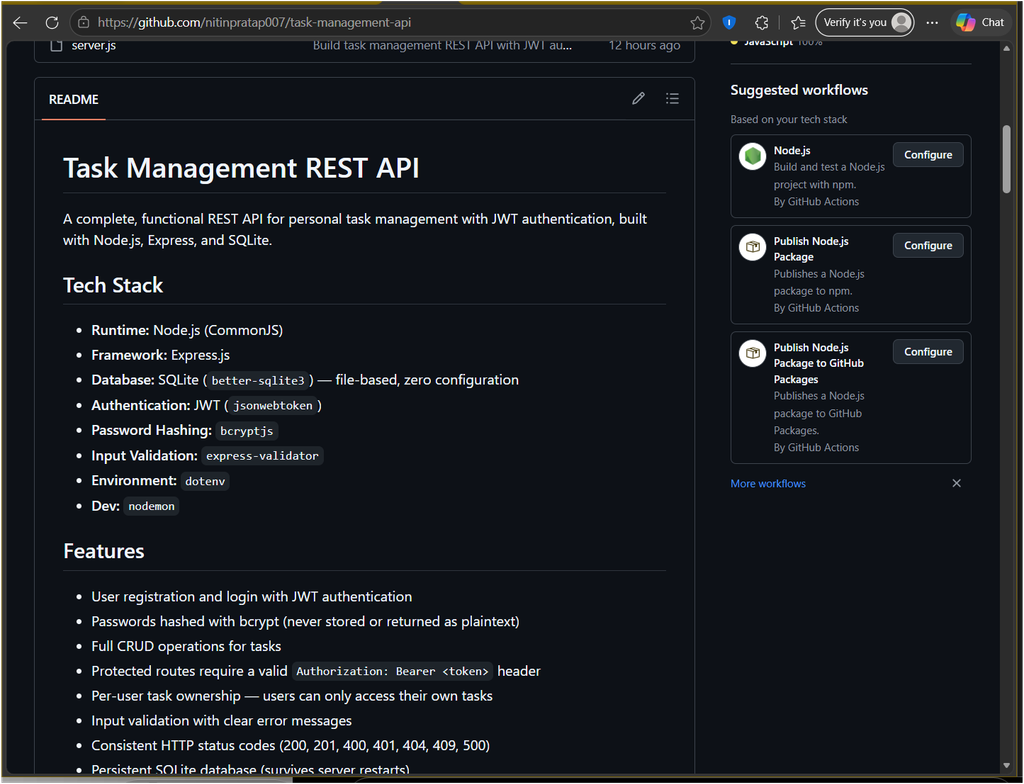
The project I am working on is called Task Management API. The main idea is to provide a structured way to manage tasks through API endpoints.
Think about a simple task management application where users need to add daily tasks, check their existing tasks, update details, or remove tasks they no longer need. These operations require the backend to receive requests, process the information, and work with stored data.
This project helped me understand how these operations can be organized using REST API principles. It also gave me a better idea of why a backend needs clear routes, proper validation, and consistent responses.
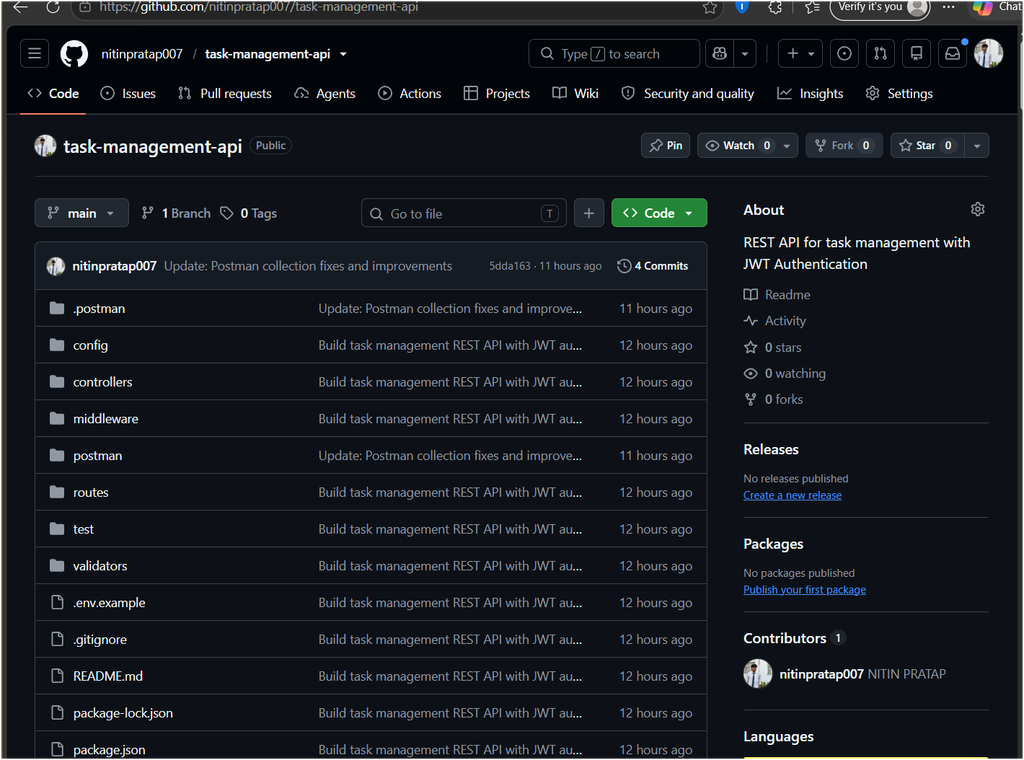
I have maintained the project in a GitHub repository so that the source code is available for review and future improvements.
Technologies Used
The project focuses on technologies and tools that are commonly used in backend web development.
Node.js is the main technology used for running JavaScript on the server side. It allows developers to build backend applications using JavaScript.
Express.js helps organize API routes and handle incoming HTTP requests. It makes it easier to structure a Node.js application without writing all the request-handling logic from scratch.
REST API principles help define how clients interact with resources through HTTP methods such as GET, POST, PUT, and DELETE.
Database integration is important for storing task information so that the data can be retrieved later instead of being lost when the server stops.
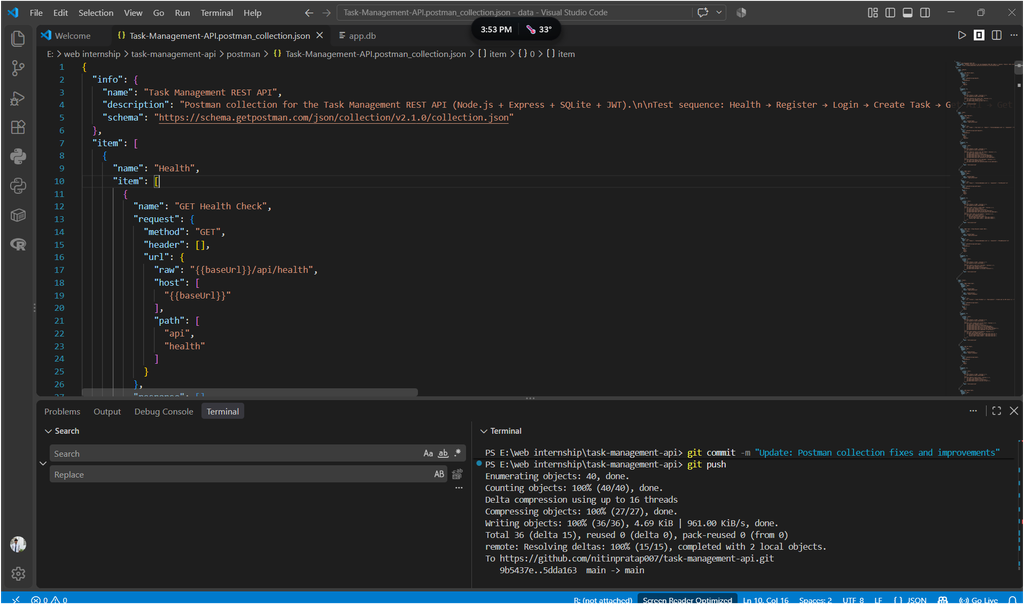
Git and GitHub help manage source code, track changes, and maintain a record of development work.
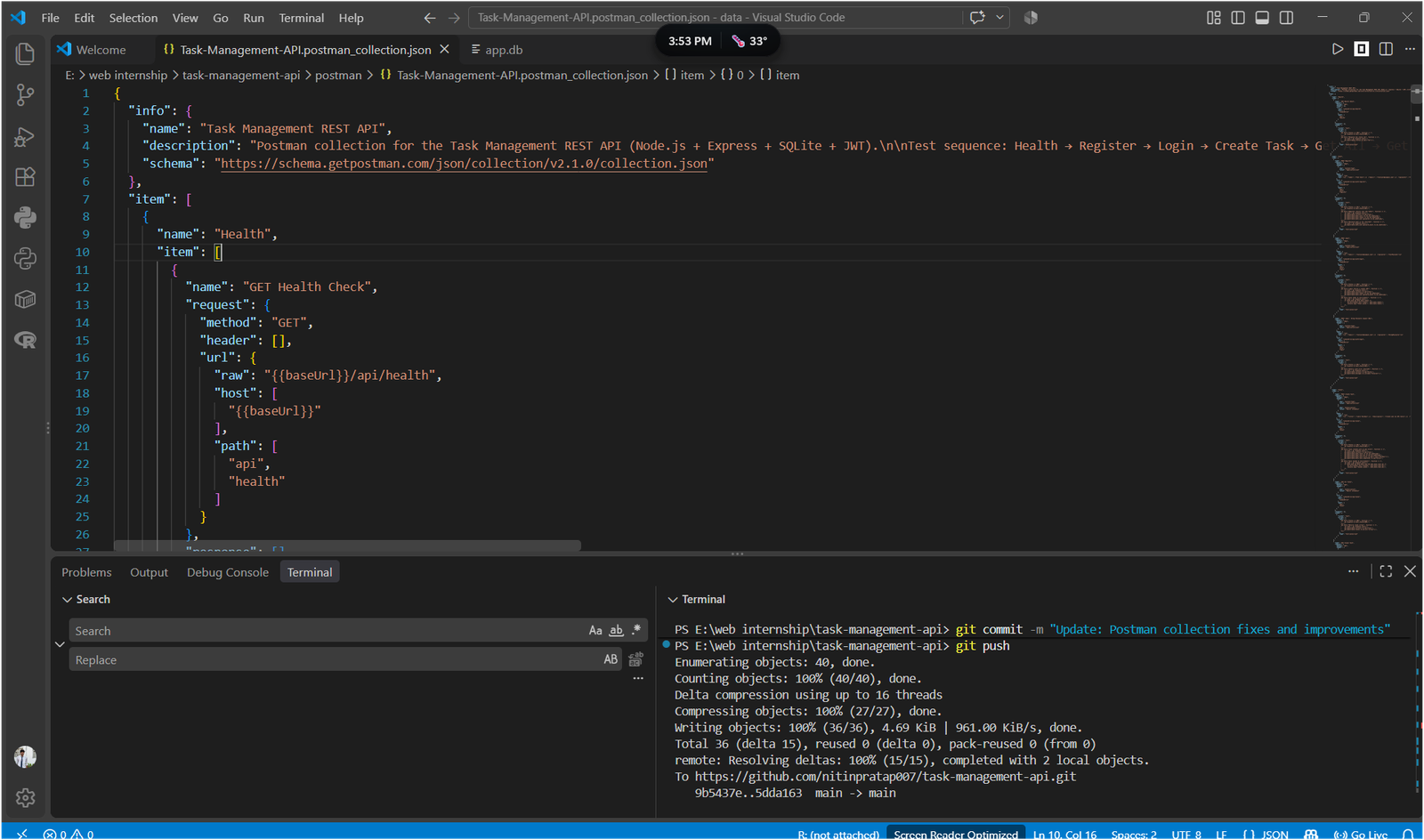
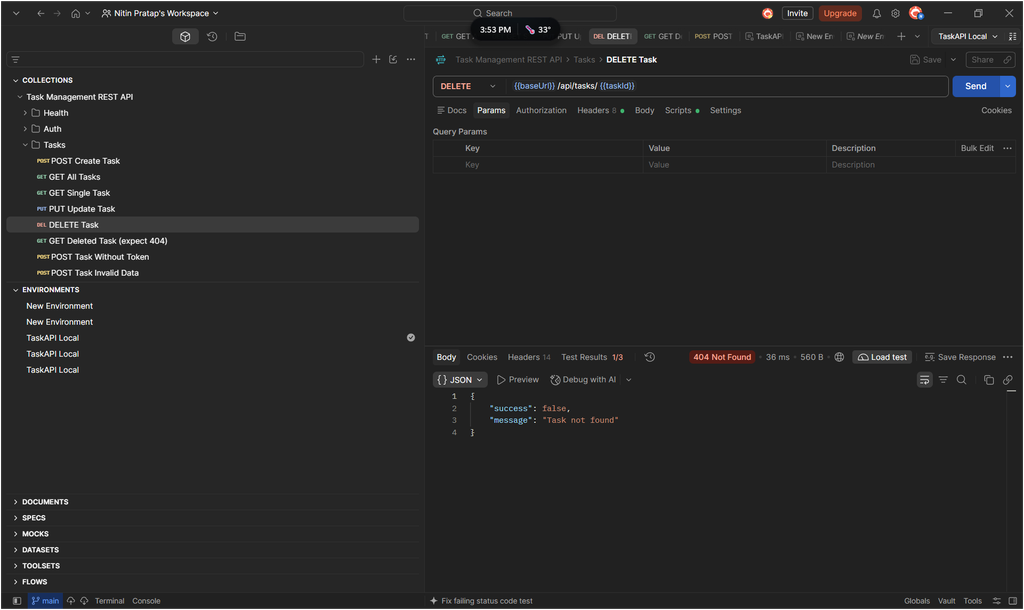
Postman is useful for testing API endpoints by sending requests and checking the responses returned by the server.
Each technology has a different role, and understanding how they work together is one of the most useful parts of this project.
Key Features of a Task Management API
1. CRUD Operations
CRUD stands for Create, Read, Update, and Delete. These are the basic operations required to manage information in many applications.
In a task management system, users need to create tasks, view task details, update existing information, and delete tasks when necessary. Understanding how these operations work through API requests is an important part of backend development.
2. API Routes and HTTP Methods
API routes define how the server responds to different requests. GET is generally used to retrieve information, POST to create a resource, PUT to update a resource, and DELETE to remove a resource.
Keeping routes organized makes the API easier to understand and maintain. It also helps developers test each operation separately.
3. Data Validation and Error Handling
Not every request sent to a server contains valid information. A user might forget a required field, send an incorrect value, or request a resource that does not exist.
Data validation helps check incoming information before processing it. Error handling ensures that the API returns an appropriate response instead of crashing or exposing unnecessary internal details.
4. Authentication and Access Control
For applications that support multiple users, authentication is another important consideration. Protected endpoints should verify the user’s identity, and users should only be allowed to access the tasks they are authorized to manage.
This highlights the importance of thinking about security while building backend applications, rather than treating it as an afterthought.
Challenges and What I Learned
One of the important things I learned while working on this task is that building an API involves more than just writing a few routes. Every endpoint needs to handle incoming data correctly and return a meaningful response.
Understanding the difference between HTTP methods and choosing suitable status codes helped me see how APIs communicate the result of an operation. I also learned why database integration matters when an application needs to store information reliably.
Another useful part of the process is testing. Tools such as Postman can help developers check whether endpoints behave as expected and identify problems during development.
I also realized that security and data validation should be considered from the beginning. For example, an API that manages user-specific tasks should not allow one user to access another user’s private information simply by changing a task ID.
These concepts have given me a clearer understanding of backend development and the importance of writing code that is organized, maintainable, and reliable.
Conclusion
Working on the Task Management API has been a valuable learning experience during my internship at Valentius Kryptix. It has helped me explore REST API concepts and understand how backend applications handle requests, manage data, and communicate with clients.
I know that there is still more to learn, especially when it comes to advanced security practices, automated testing, and building larger applications. However, this project has given me a practical starting point and motivated me to continue improving my backend development skills.
I look forward to applying these concepts in future projects and learning more about building useful and reliable web applications.
Explore the project on GitHub: https://github.com/nitinpratap007/task-management-api

Leave a Reply
You must be logged in to post a comment.