

Introduction to Production LLM API Integration
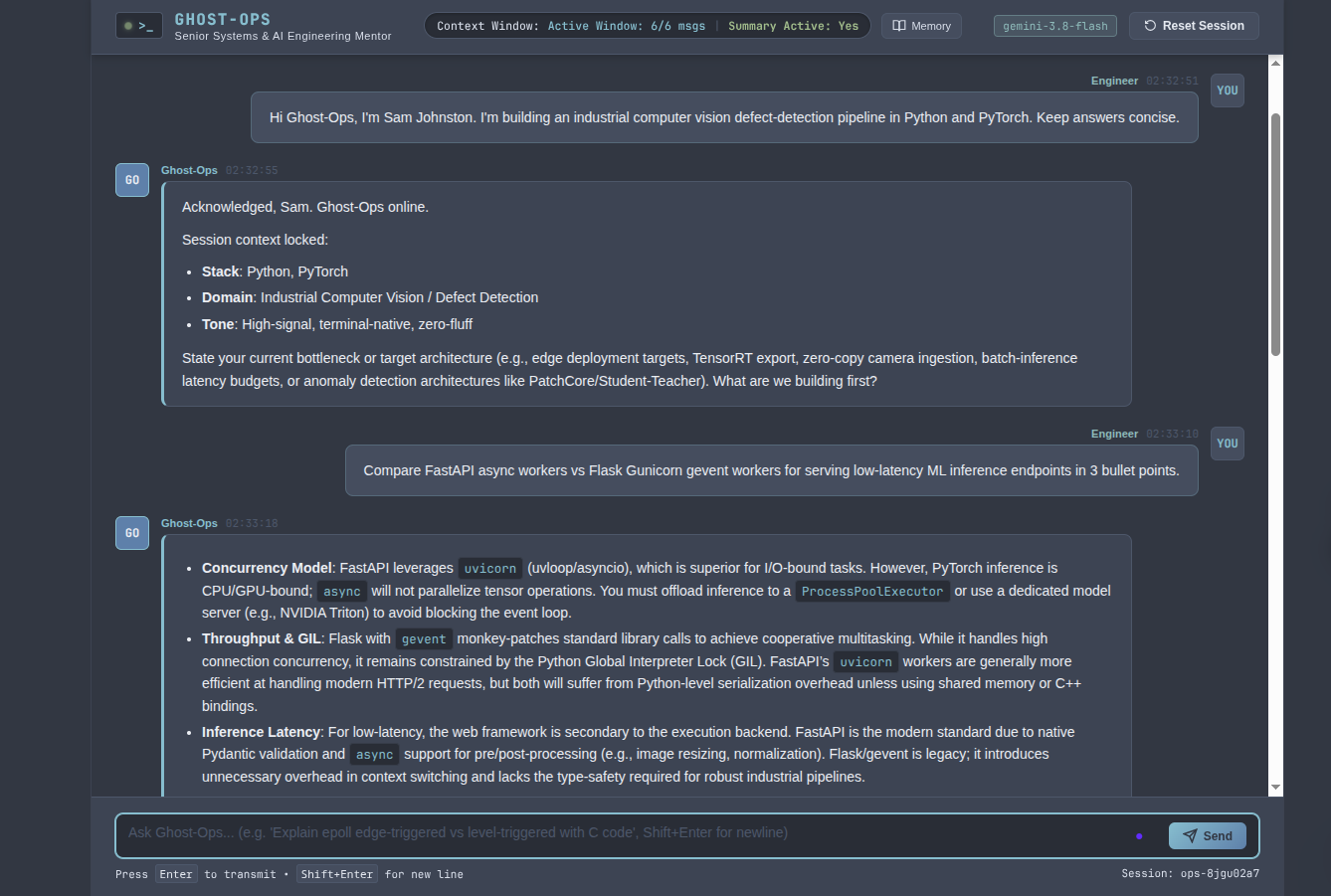
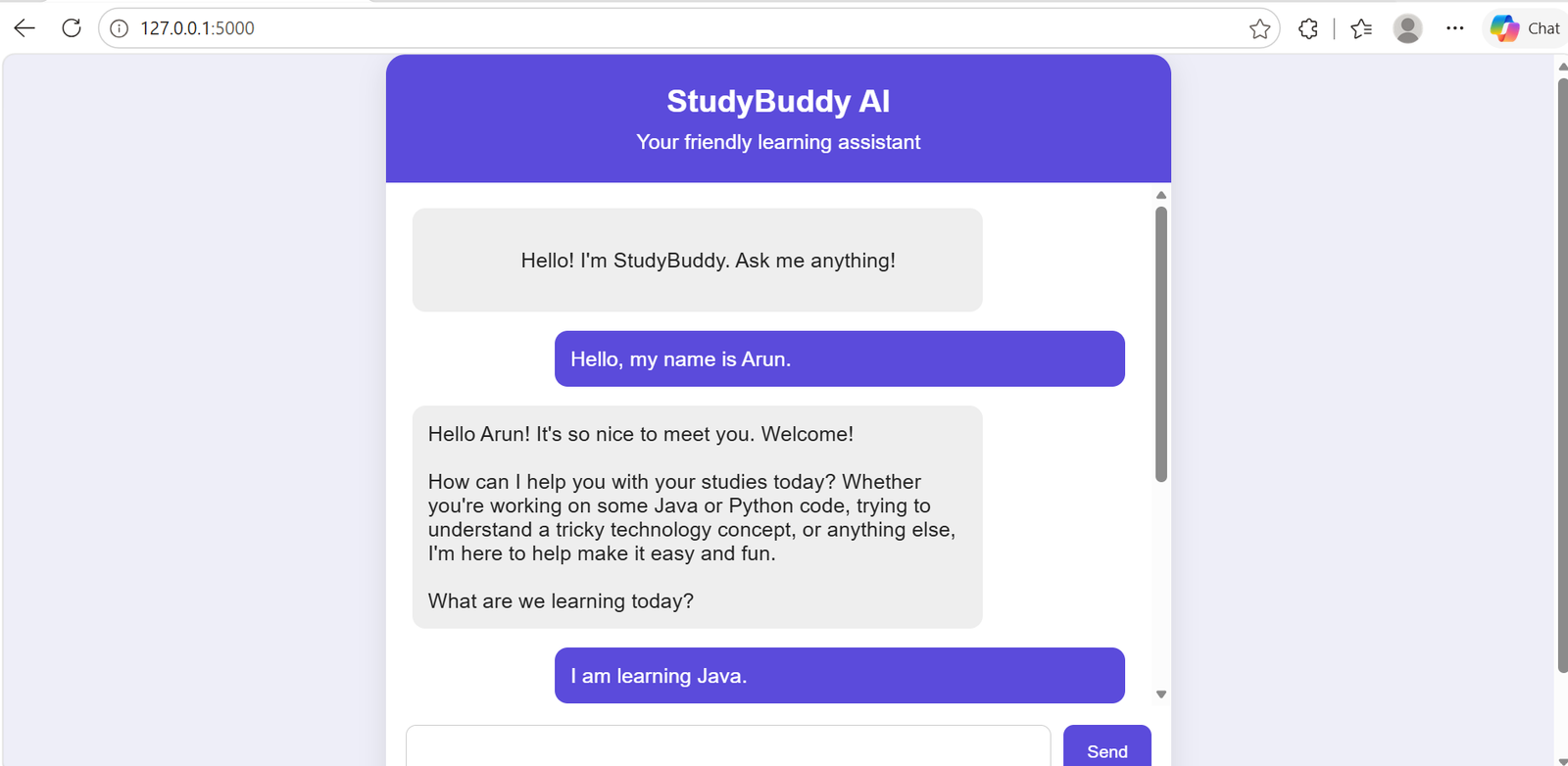
Integrating Large Language Models (LLMs) into real-world applications requires far more than sending a single text prompt to an endpoint and printing the response. While basic API calls work for isolated queries, production systems must handle multi-turn conversations, strict token limits, network latency, and unpredictable API errors. During my AI engineering internship tasks at Valentius Kryptix, I developed a modular framework for LLM API Integration powered by the Google Gemini API that transforms stateless endpoints into stateful, memory-aware conversational agents.
The Core Challenge: Stateless APIs and Token Bottlenecks
By default, LLM APIs are stateless, meaning the model has no memory of previous exchanges unless the application explicitly sends the conversation history with every new request. In a naive implementation, developers simply append every user message and model reply to a growing list. As a conversation scales beyond a few dozen turns, this approach creates three major engineering bottlenecks:
- Latency spikes: Sending thousands of historical tokens on every turn increases time-to-first-token and degrades the user experience.
- Cost escalation: API billing scales directly with input token volume, making unbounded chat histories expensive to maintain.
- Context dilution: Even with large context windows, models can lose focus on immediate instructions when buried under outdated conversational noise.
Architecting a Hybrid Memory Pipeline
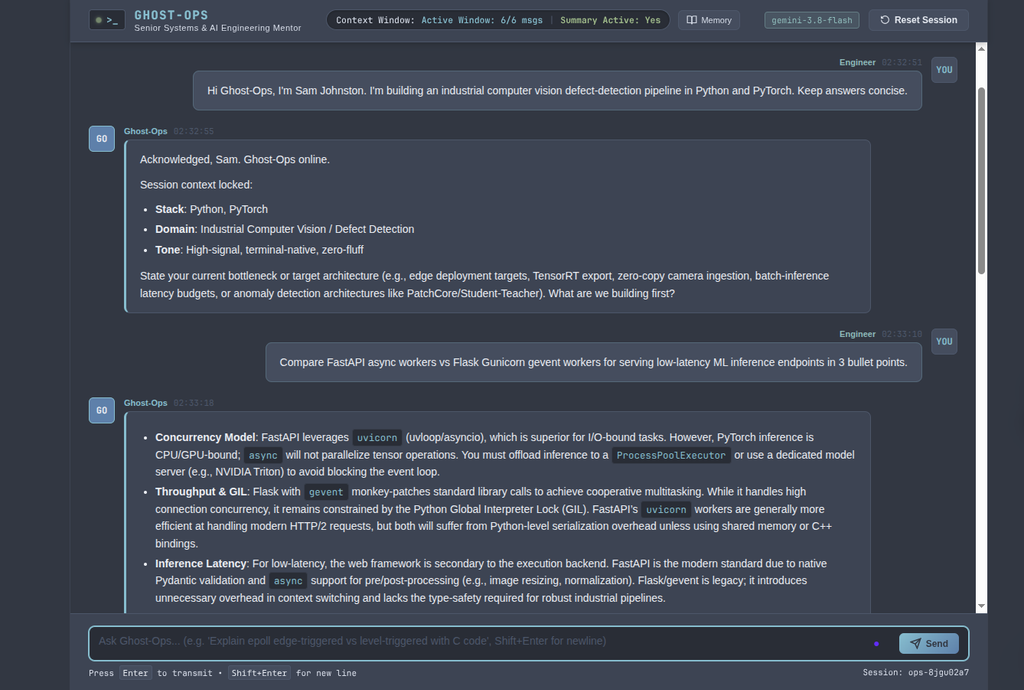
To solve the stateless problem without exhausting token budgets, my LLM API Integration architecture combines two complementary techniques: a Sliding-Window Buffer for short-term precision and Rolling Summaries for long-term retention.
- System Instruction Anchoring: Every API payload starts with a persistent system prompt that defines the assistant’s persona, formatting rules, and operational boundaries.
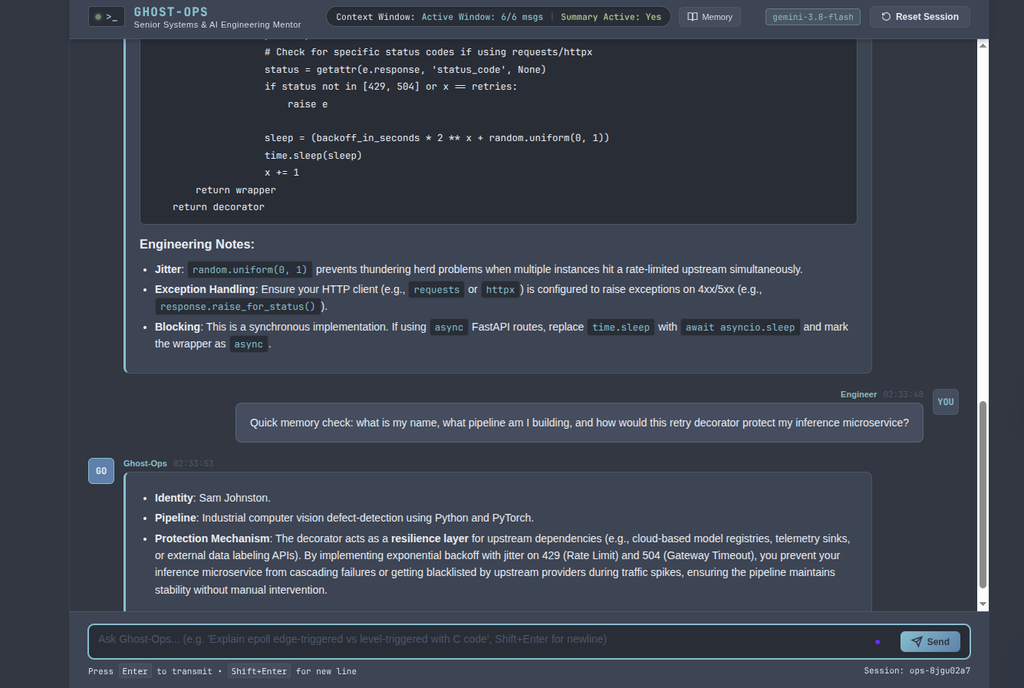
- Sliding-Window Context Management: The framework maintains a strict FIFO (First-In, First-Out) queue of the most recent $k$ conversation turns in verbatim form so the model retains exact code snippets and immediate follow-up context.
- Asynchronous Rolling Summarization: When older messages get pushed out of the active sliding window, they are not discarded; instead, a lightweight background call compresses evicted turns into a dense rolling summary injected right after the system prompt.
Building Resilience for Production Workflows
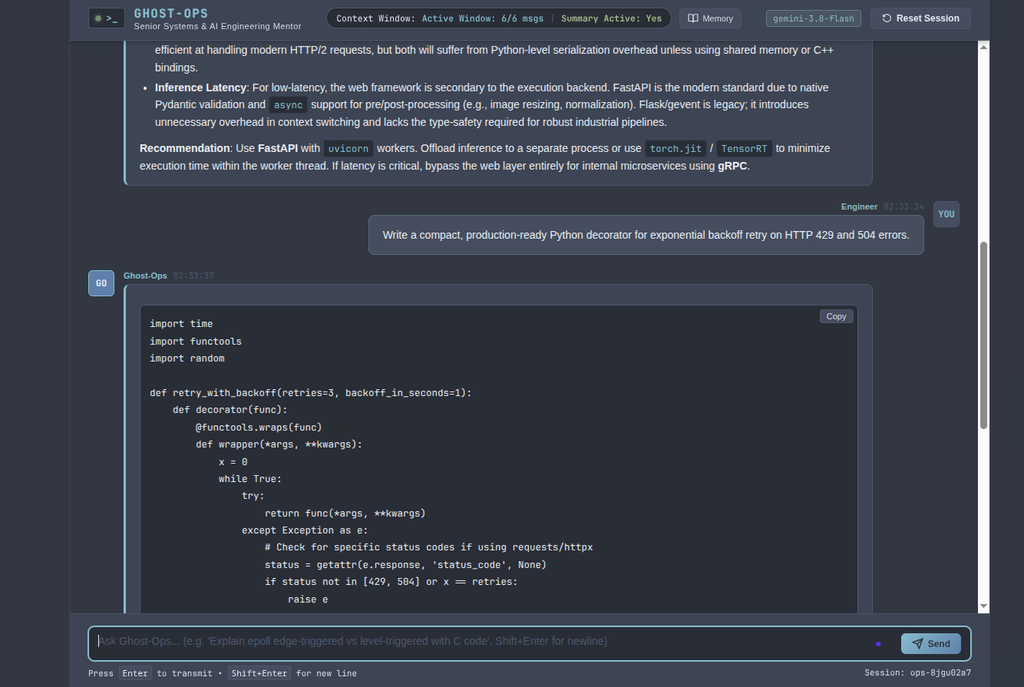
A reliable LLM API Integration must also account for external service failures, rate limits, and malformed outputs. In my implementation, the communication layer wraps the Google Gemini SDK inside a resilient client manager designed around three core safeguards:
- Exponential Backoff and Retries: Transient HTTP 429 (Rate Limit) and 5xx server errors are caught automatically and retried with jittered delays to prevent cascading failures.
- Environment-Driven Configuration: API keys, temperature settings, and token thresholds are decoupled from business logic using secure environment variables and strict schema validation.
- Real-Time Token Telemetry: Each API response logs prompt tokens, completion tokens, and total latency, enabling developers to monitor cost efficiency across long sessions.
Key Takeaways from the Implementation
Building this system highlighted the difference between a prototype script and a production-ready AI backend. By pairing the Google Gemini API with sliding-window memory and rolling summaries, the application maintains coherent, context-rich dialogues across extended sessions while keeping token usage flat and predictable. Whether deploying customer support agents, developer CLI assistants, or automated analytics pipelines, structured context management remains the foundation of effective LLM API Integration.

Leave a Reply
You must be logged in to post a comment.