

Author: Kammila Pavan Kumar
Organization: Valentius Kryptix
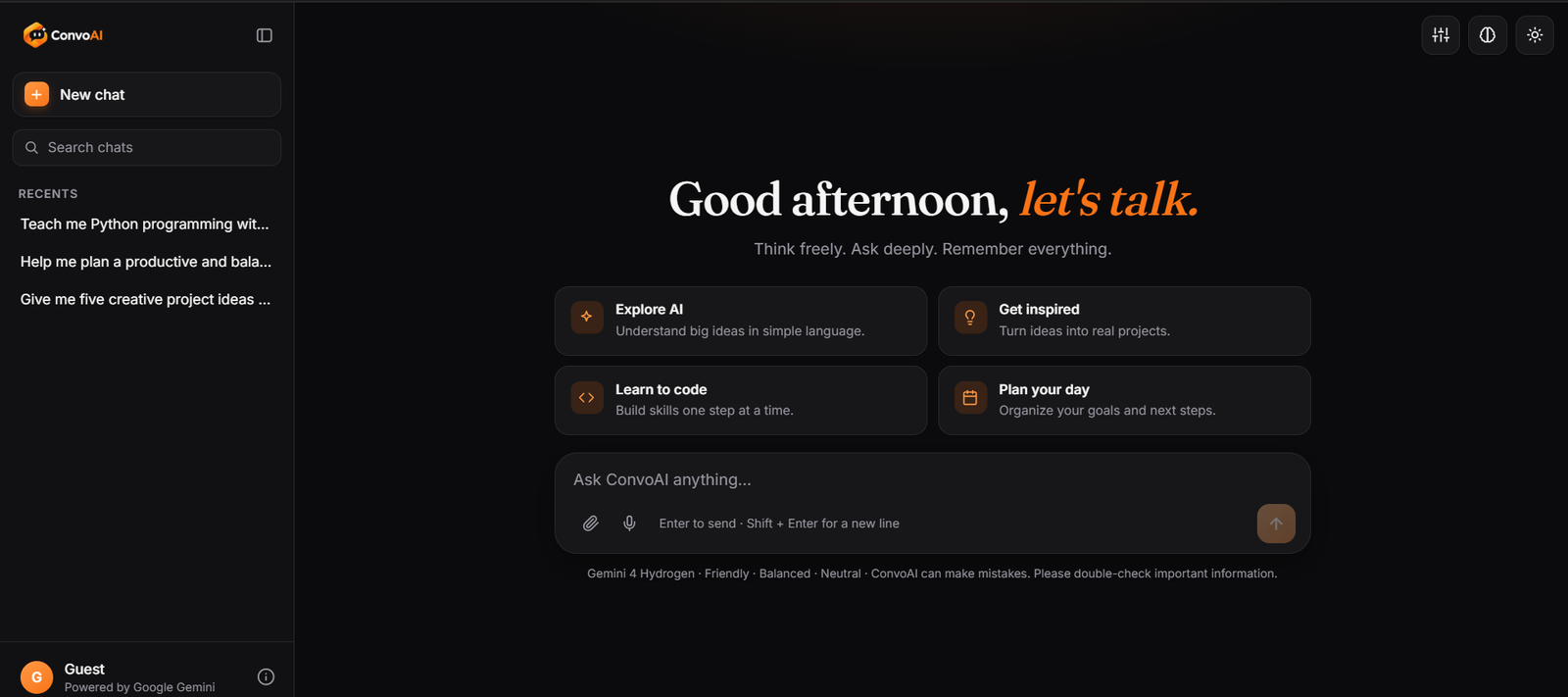
Project: ConvoAI
Technology: Google Gemini API, Backend Integration, Prompt Engineering
Introduction
Artificial Intelligence is transforming the way modern applications interact with users. Among the most significant developments in this field are Large Language Models (LLMs), which enable applications to understand natural language, generate meaningful responses, and assist users with complex tasks.
Integrating an LLM into an application is more than simply connecting an API. It involves designing an effective communication flow between the user interface, backend services, and the AI model while ensuring reliability, security, and a consistent user experience.
During my internship at Valentius Kryptix, I worked on LLM API integration through ConvoAI, an AI-powered conversational application. The project provided practical exposure to integrating Google’s Gemini API, managing backend communication, handling prompts, generating AI responses, and implementing error-handling mechanisms.
1. Understanding LLM API Integration
Large Language Models are AI systems trained on extensive datasets to understand and generate human-like language. They can perform tasks such as answering questions, summarizing information, explaining concepts, and assisting with problem-solving.
An LLM API acts as a communication bridge between an application and an AI model. Instead of developing and hosting a language model independently, developers can send requests to an existing model through an API and receive generated responses.
Google Gemini provides API access to its generative AI models, allowing developers to incorporate conversational intelligence into their applications.
The general integration process involves:
- Collecting input from the user.
- Sending the input to the application backend.
- Processing the request and preparing the prompt.
- Communicating with the Gemini API.
- Receiving and processing the model response.
- Returning the generated output to the user interface.
This architecture makes it possible to build interactive AI applications without managing the underlying model infrastructure.
2. Project Overview: ConvoAI
ConvoAI is a project focused on creating an AI-powered conversational experience using Large Language Model capabilities.
The primary objective was to establish communication between the application and an external AI service so that users could interact with an AI model through natural language.
The integration focused on several important areas:
- LLM API Integration: Connecting the application with Google’s Gemini API to access generative AI capabilities.
- Backend Communication: Establishing a communication layer between the application and the external AI service.
- Prompt Handling: Preparing and managing user prompts before sending requests to the model.
- Response Generation: Receiving generated responses and making them available to the application.
- Error Handling: Managing unsuccessful requests and API-related issues to improve application reliability.
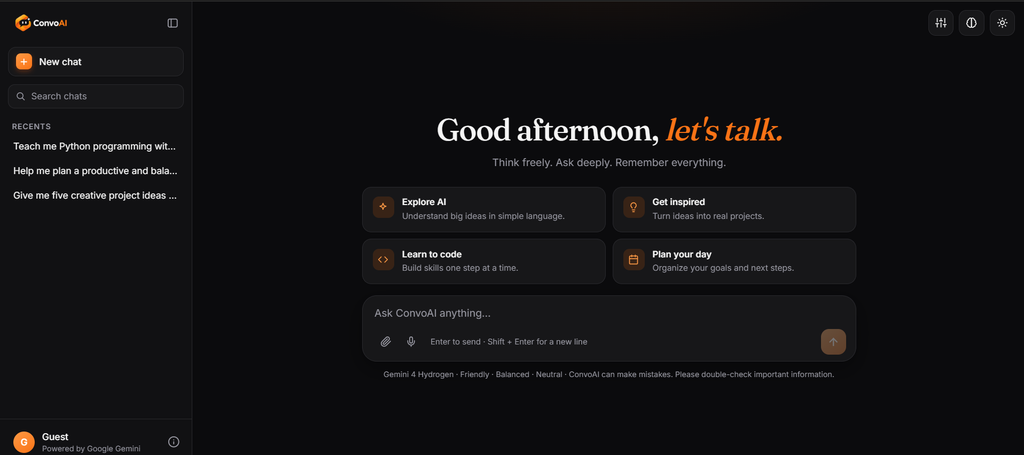
Working on ConvoAI helped me understand how different application components work together to deliver an AI-powered conversational experience.
3. Understanding the Integration Architecture
A reliable LLM-powered application generally follows a request-response architecture.
The communication flow can be represented as:
User → Frontend → Backend → Gemini API → Backend → Frontend → AI Response
Each component has a specific responsibility.
Frontend Layer:
The frontend collects user messages and displays the generated responses. It also provides feedback while a request is being processed.
Backend Layer:
The backend receives user input, validates the request, prepares the necessary data, and communicates with the Gemini API. Keeping API communication on the server side also helps protect sensitive credentials.
Gemini API Layer:
The Gemini API processes the submitted prompt and generates a response based on the model’s capabilities and the supplied instructions.
Response Layer:
The backend receives the model output, handles the response appropriately, and sends it back to the frontend for display.
Separating these responsibilities makes the application easier to maintain, debug, and extend.
4. Prompt Handling and Response Generation
Prompt handling is one of the most important aspects of building applications powered by LLMs.
A prompt provides instructions or context that guides the language model in generating a response. Poorly structured prompts may produce irrelevant or inconsistent outputs, whereas clear and contextual prompts can improve response quality.
During the ConvoAI integration work, prompt handling was an important part of the communication process.
Some key considerations include:
- Understanding and validating the user’s input.
- Structuring prompts with clear instructions.
- Providing relevant conversational context when required.
- Sending appropriately formatted requests to the model.
- Processing the generated response before displaying it.
Response generation involves submitting the prepared prompt to the Gemini API and receiving the generated content.
The application must handle the response carefully, including cases where the model returns an empty response, an unexpected format, or an unsuccessful request.
5. Backend Communication and Error Handling
Connecting an application to an external AI service introduces several technical challenges. Network interruptions, API limits, invalid requests, authentication problems, and service availability can affect communication.
A reliable integration should account for these situations.
Some important error-handling practices include:
Input Validation: Validate user input before sending requests to avoid unnecessary or malformed API calls.
API Error Handling: Handle unsuccessful HTTP responses and API errors appropriately.
Network Failure Management: Account for connection failures and timeouts so the application does not remain stuck waiting for a response.
API Key Security: Store API credentials in environment variables or a secure server-side configuration rather than exposing them in frontend code or public repositories.
User-Friendly Feedback: Display meaningful error messages instead of exposing internal technical details to users.
These practices contribute to a more reliable and secure AI-powered application.
6. Key Technical Learnings
Working on ConvoAI provided valuable practical experience in several areas of modern software development.
The major learnings included:
- LLM API Integration: Understanding how external generative AI services can be connected to real-world applications.
- Backend Communication: Learning how frontend and backend components exchange information with external APIs.
- Prompt Engineering: Understanding how prompt structure and instructions influence AI-generated responses.
- Response Processing: Learning how to receive, process, and deliver model-generated content.
- Error Handling: Recognizing the importance of handling API failures, network issues, and unexpected responses.
- API Security: Understanding why sensitive API credentials must be protected through server-side configuration.
This experience strengthened my understanding of how Generative AI can be integrated into practical software applications.
7. Future Possibilities of LLM-Powered Applications
LLM API integration opens up opportunities for building more intelligent and interactive applications.
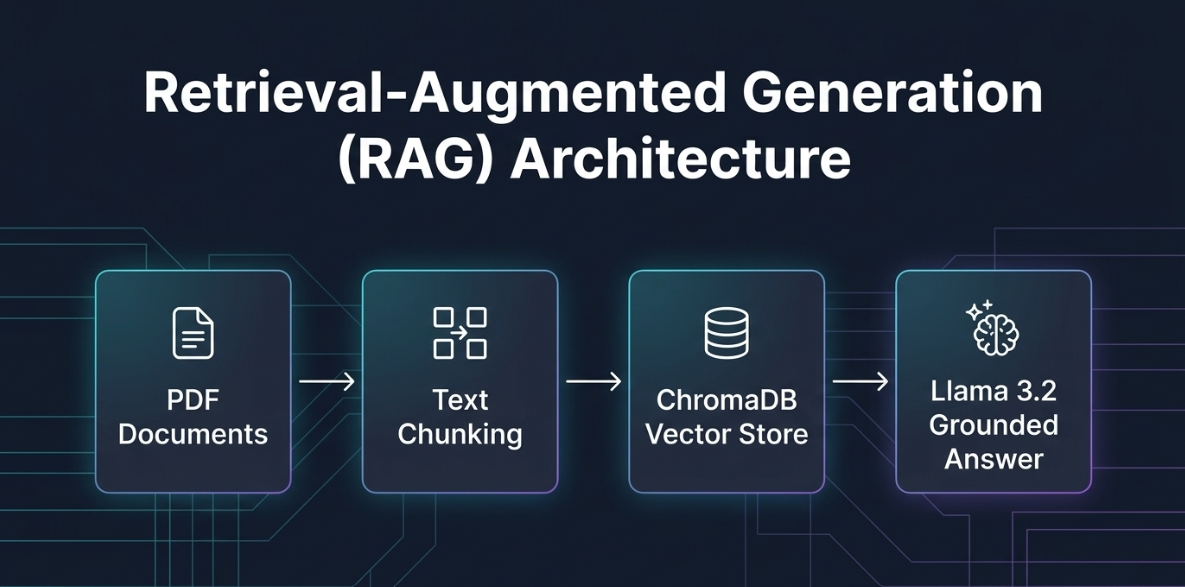
Future improvements to conversational applications could include conversation history management, streaming responses, contextual memory, document-based question answering, retrieval-augmented generation (RAG), and support for multiple AI models.
These capabilities can make AI applications more useful, personalized, and adaptable to different user requirements.
However, building dependable AI applications also requires attention to response accuracy, data privacy, security, latency, and API usage costs.
Conclusion
LLM API integration is an important step toward developing intelligent applications that can understand and respond to human language.
Working on ConvoAI using Google’s Gemini API during my internship at Valentius Kryptix gave me valuable exposure to the practical aspects of integrating Generative AI into an application. From backend communication and prompt handling to response generation and error management, the experience helped me understand the complete flow involved in connecting an application with an external language model.
This experience has strengthened my interest in Artificial Intelligence, Generative AI, and backend development. It has also motivated me to explore more advanced techniques for building reliable, scalable, and intelligent applications.
The future of software development is not just about building applications; it is about making applications more intelligent, interactive, and useful through AI.
About the Author
Kammila Pavan Kumar is a Computer Science and Engineering student specializing in Artificial Intelligence and Machine Learning. His interests include Generative AI, Machine Learning, Cloud Computing, and software development. He enjoys exploring emerging technologies and building practical applications that solve real-world problems.



Leave a Reply
You must be logged in to post a comment.