

Introduction
Artificial Intelligence (AI) is changing the way we work, learn, and solve problems. Tools such as ChatGPT and Google Gemini can generate text, answer questions, write code, summarize documents, and assist with many everyday tasks. However, the quality of their responses depends greatly on how we communicate with them.
This is where Prompt Engineering becomes important.
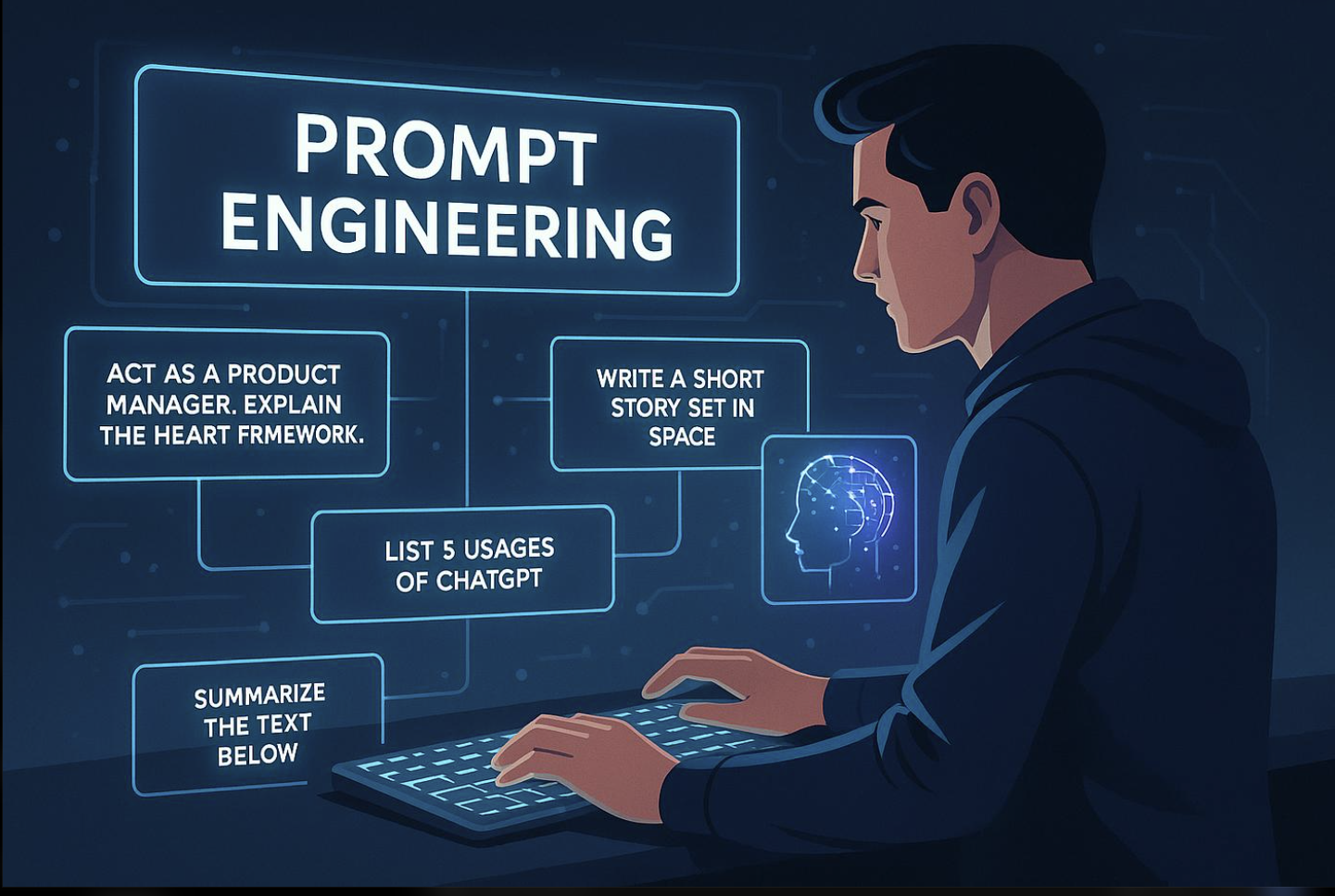
Prompt Engineering is the process of designing and improving instructions given to AI models to obtain accurate, relevant, and useful responses. It helps users communicate their requirements clearly and get better results from AI tools.
As AI continues to grow, prompt engineering is becoming an important skill for students, developers, researchers, and professionals.
What Is Prompt Engineering?
Prompt Engineering is the practice of creating effective inputs, also called prompts, for AI systems. A prompt tells an AI model what task to perform and how to respond.
For example:
A basic prompt:
“Explain Machine Learning.”
An improved prompt:
“Explain Machine Learning in simple words for a beginner. Include its definition, three real-world applications, and one easy example.”
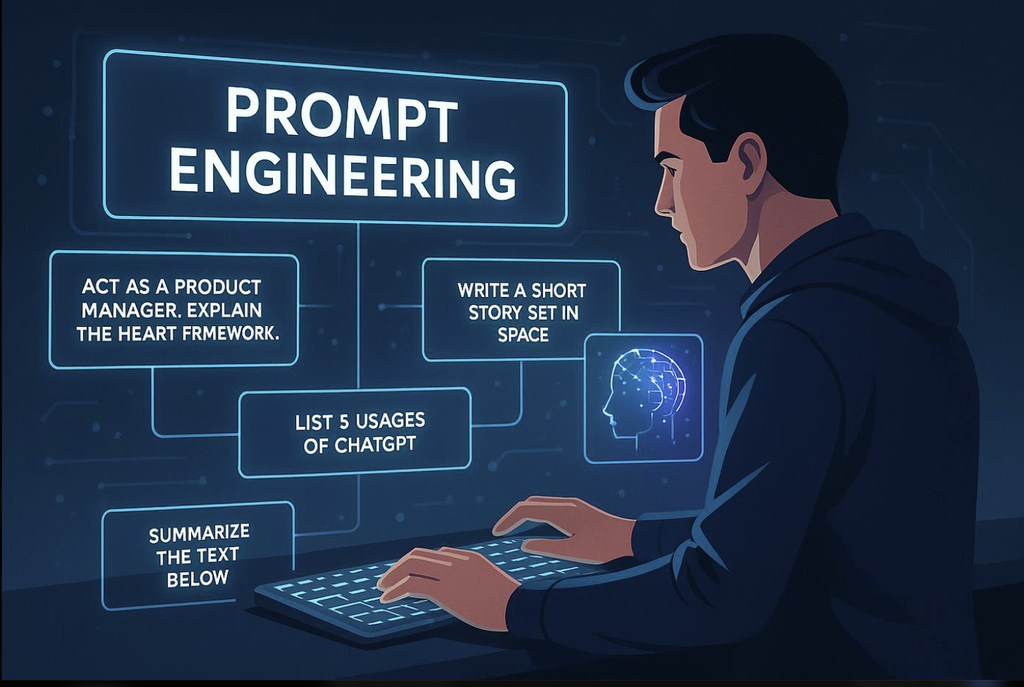
The second prompt provides more details and gives the AI a clear direction. As a result, the response is more useful and relevant.
Why Is Prompt Engineering Important?
Prompt Engineering plays an important role in getting better results from AI tools.
Some key benefits include:
- Better Accuracy: Clear instructions help AI generate more relevant responses.
- Time Saving: Well-designed prompts reduce the need for repeated questions.
- Improved Productivity: AI can help with writing, coding, research, and data analysis.
- Better Communication: Users can guide AI tools according to their specific requirements.
- Automation: Effective prompts can support AI-powered applications and workflows.
Prompt engineering is useful in education, software development, business, healthcare, content creation, and many other fields.
Important Prompt Engineering Techniques
There are several techniques used to improve the quality of AI-generated responses.
1. Zero-Shot Prompting
Zero-shot prompting means asking an AI model to perform a task without providing examples.
Example:
“Classify this sentence as positive or negative: I really enjoyed this product.”
The AI understands the instruction and generates an answer without needing sample inputs.
2. Few-Shot Prompting
Few-shot prompting involves providing a few examples before asking the AI to perform a task.
Example:
Positive: I love this service.
Negative: The experience was disappointing.
Now classify: The product is excellent.
By providing examples, users help the AI understand the expected format and pattern.
3. Role-Based Prompting
Role-based prompting means assigning a particular role to the AI before giving it a task.
Example:
“You are an experienced Python developer. Explain Python functions with simple examples for beginners.”
This provides context and helps guide the style of the response.
4. Structured Output Prompting
Structured output prompting instructs an AI model to generate responses in a specific format, such as JSON, tables, or bullet points.
Example:
“Provide information about three programming languages in JSON format with their names, uses, and advantages.”
This technique is especially useful when working with APIs and software applications.
5. Step-by-Step Prompting
For complex tasks, prompts can ask the AI to organize its explanation into clear steps.
Example:
“Explain how to build a basic machine learning project, including data collection, preprocessing, model training, and evaluation.”
This makes complex information easier to understand and follow.
Practical Implementation: My Prompt Engineering Project
As part of my learning and internship activities at Valentius Kryptix, I explored prompt engineering techniques through a practical project.
The main objective was to understand how different prompting methods affect AI-generated responses.
I worked on a project called Prompt Engineering Mastery Lab, where I explored and compared different prompting techniques.
The project focused on the following activities:
- Comparing Zero-Shot and Few-Shot prompting.
- Exploring different ways of structuring instructions.
- Comparing responses generated using different prompting approaches.
- Testing structured JSON output across multiple inputs.
- Understanding how prompt clarity affects the quality of AI responses.
Through these activities, I gained practical knowledge of how prompts influence AI-generated content.
The project also helped me understand that writing a good prompt requires more than simply asking a question. It involves defining the task, providing context, specifying the expected output, and testing the results.
Common Mistakes in Prompt Engineering
Beginners often make mistakes when writing prompts. Some common mistakes include:
- Giving unclear or incomplete instructions.
- Not providing enough background information.
- Combining too many unrelated tasks in one prompt.
- Not specifying the expected response format.
- Accepting AI-generated answers without checking their accuracy.
To avoid these mistakes, users should write clear instructions, provide relevant context, and review the generated results.
Applications of Prompt Engineering
Prompt Engineering has applications in many industries.
- Education: Creating study notes, quizzes, and explanations.
- Software Development: Generating code, debugging, and understanding programming concepts.
- Business: Preparing reports, analyzing information, and automating tasks.
- Content Creation: Generating blog posts, social media content, and marketing ideas.
- Data Analysis: Helping interpret datasets and explain analytical results.
These applications show how prompt engineering can improve productivity across different fields.
Future Scope of Prompt Engineering
With the continuous development of Generative AI, prompt engineering will remain a useful skill for people working with AI systems.
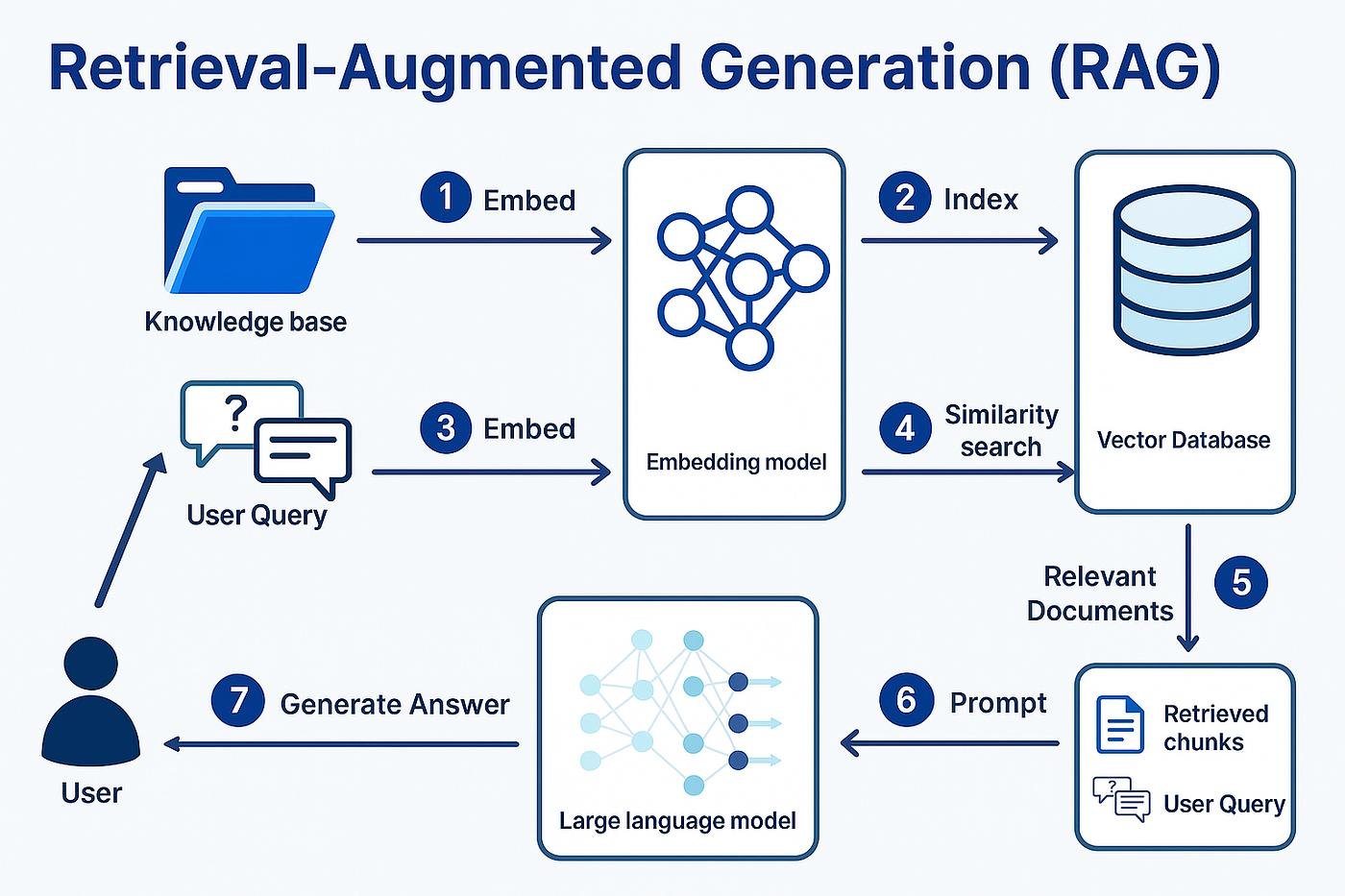
It is also closely connected with areas such as Large Language Models (LLMs), AI agents, Retrieval-Augmented Generation (RAG), and AI automation.
Learning prompt engineering provides a strong foundation for understanding how modern AI applications work.
However, prompt engineering should be combined with programming knowledge, critical thinking, and an understanding of AI limitations to build more effective solutions.

Conclusion
Prompt Engineering is an important skill in the modern AI era. It teaches us how to communicate effectively with AI models and generate more useful results.
By learning techniques such as Zero-Shot, Few-Shot, Role-Based, and Structured Output Prompting, users can improve their interaction with AI tools.
My practical experience with the Prompt Engineering Mastery Lab helped me understand these techniques and their real-world applications.
As Generative AI continues to evolve, learning how to write effective prompts is a valuable step toward becoming skilled in AI and modern technology.
The key takeaway is simple: Better instructions lead to better AI interactions.

Leave a Reply
You must be logged in to post a comment.