

Introduction
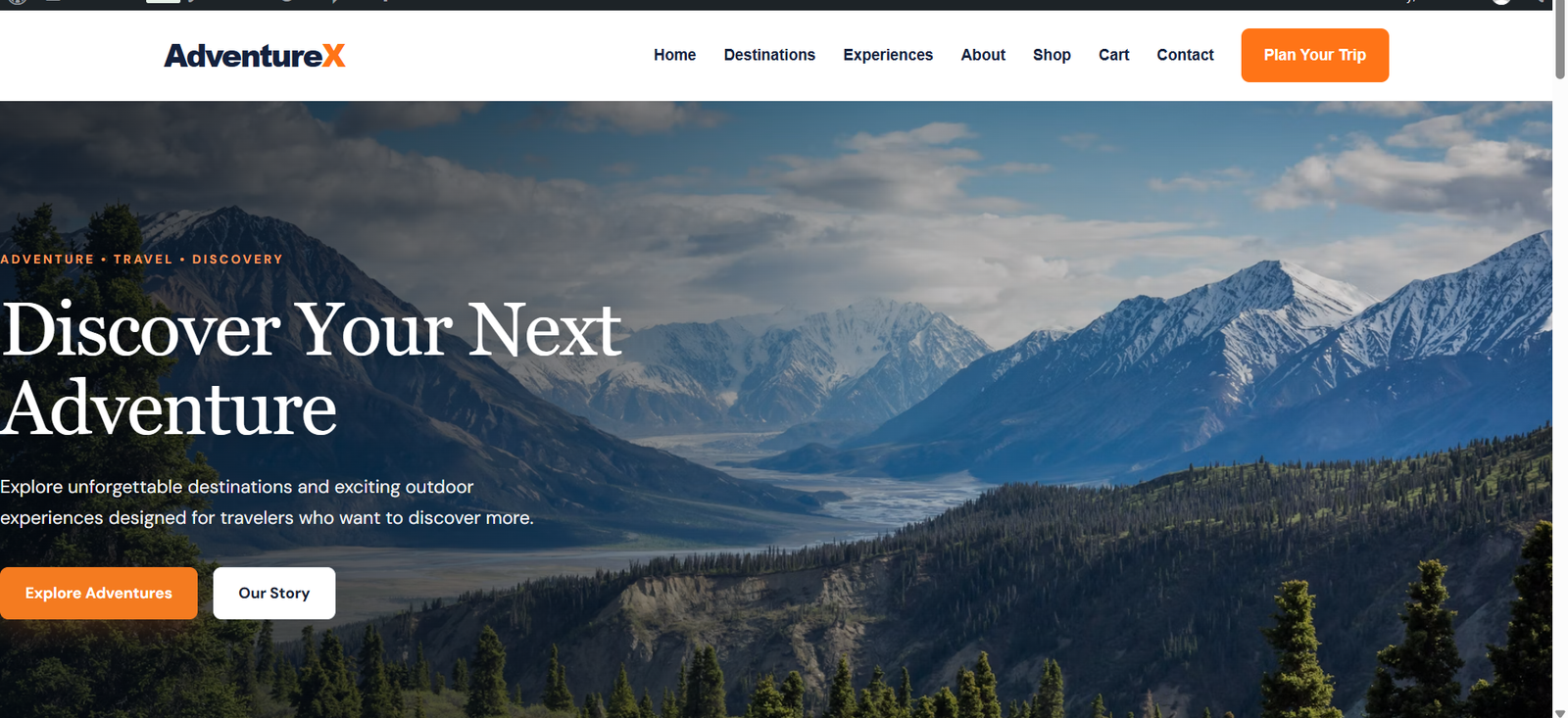
As part of my internship journey with Valentius Kryptix, I worked on extending my AdventureX website into a more complete and commercially ready WordPress website. The goal of this milestone was to move beyond a simple informational travel website and add practical e-commerce functionality that allows visitors to explore products, add items to a shopping cart, and proceed through a checkout process.
AdventureX is designed around outdoor adventures, travel experiences, and travel-related products. During this milestone, I focused on creating a website that combines an attractive user interface with useful e-commerce features while maintaining the responsive design, SEO, and interactive functionality developed in the earlier stages of the project.
Transforming AdventureX into an E-Commerce Website
The first step was to extend the existing AdventureX WordPress website with online-store functionality. I worked with WordPress and an e-commerce solution to create a product-based shopping experience.
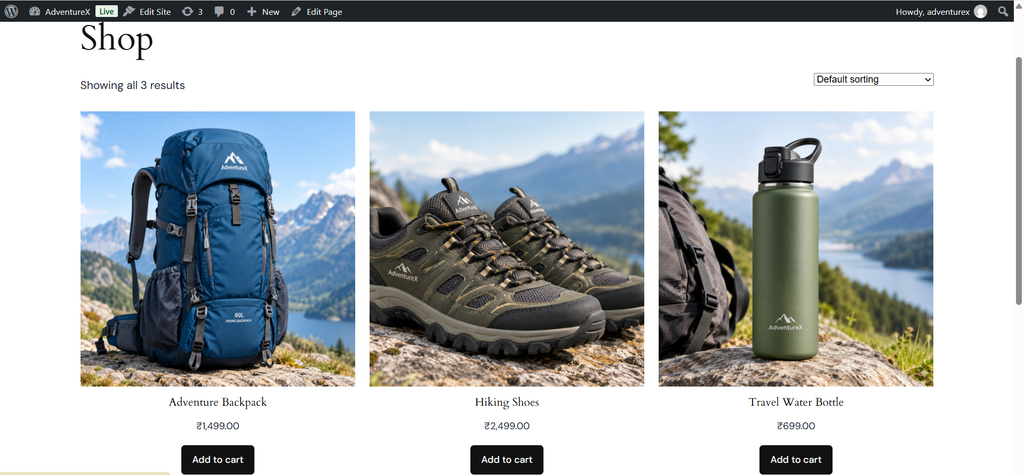
The store includes travel and adventure-related products with important information such as product names, descriptions, prices, images, and other product details. For example, products can include items such as travel backpacks, hiking shoes, and other outdoor accessories.
Product images were added to make the store more visually appealing and help visitors understand the products before making a purchase decision. Product descriptions were also structured to provide useful information to potential customers.
Product and Shopping Cart Functionality
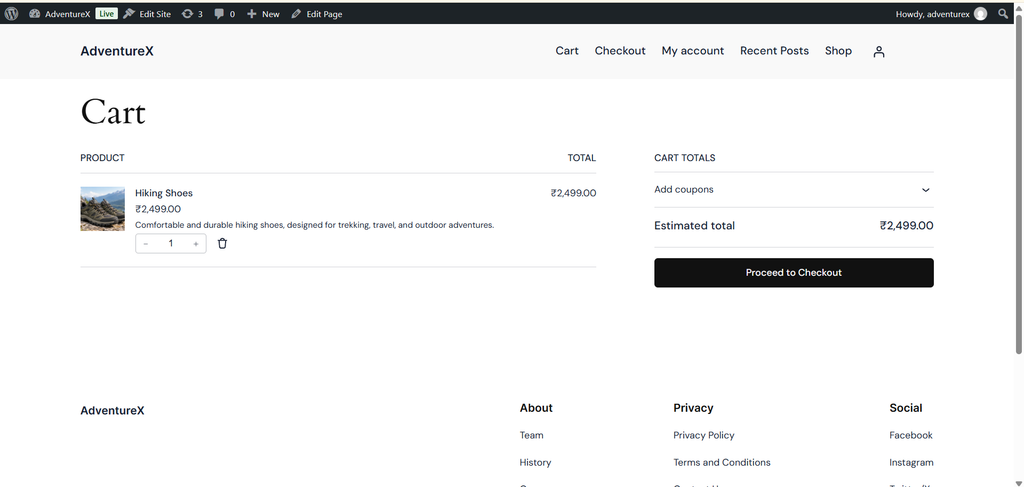
A major part of the milestone was implementing shopping cart functionality. Visitors can select products and add items to their cart. The cart provides an overview of selected products and allows users to review their order before proceeding to checkout.
The cart functionality was tested by adding products, viewing the cart, checking quantities and totals, and removing products when necessary. These tests helped verify that the basic shopping workflow was functioning correctly.
The navigation was also designed to make important pages easy to access. Visitors can move between the main AdventureX pages, product pages, the store, cart, and checkout without losing the overall website experience.
Checkout and Test Payment Flow
Another important requirement was testing the checkout process. Since this was a development and internship project, the payment process was handled using a test or sandbox approach rather than real transactions.
The checkout flow was tested from the cart through the checkout stage to verify that the required customer and billing information could be entered and that the order process could be completed using the available test configuration.
No real payment information was used during testing. This allowed me to verify the e-commerce workflow safely while avoiding real financial transactions.
Responsive Design and User Experience
While adding e-commerce functionality, I also maintained the responsive design of the AdventureX website. The website needs to work properly across different screen sizes, including desktops, tablets, and mobile devices.
I checked important areas such as the navigation, product sections, buttons, cart interface, and checkout pages to ensure that the content remains accessible and usable on smaller screens.
The overall design continues to follow the AdventureX outdoor and travel theme, providing a consistent experience between the informational sections and the new commercial features.
SEO and Website Optimization
Another important part of the project was maintaining the SEO and optimization work completed in earlier milestones. The website uses appropriate page titles, meta information, structured data where applicable, and supporting SEO files such as the sitemap and robots.txt.
Adding e-commerce functionality should not negatively affect the existing website structure or user experience. Therefore, I continued to focus on clean page structure, useful content, responsive layouts, and easy navigation.
Analytics and Tracking
Analytics was also considered as part of the commercial website setup. Google Analytics 4 and Google Tag Manager were configured to help track website activity and user interactions.
Instead of relying only on page views, the implementation focused on meaningful interactions and events. These analytics can help understand how visitors interact with the website, including actions related to products and the shopping experience.
This provides useful information for understanding website performance and identifying areas that could be improved in the future.
Testing and Verification
After implementing the e-commerce features, I tested the major parts of the website. The testing included checking product pages, adding products to the cart, viewing and modifying cart contents, removing products, and moving through the checkout process.
I also checked the website on different screen sizes and reviewed the navigation and interactive elements. These tests helped identify issues and verify that the major components were working together as expected.
Conclusion
The AdventureX project was an important step in developing a travel-focused website into a more commercially oriented platform. By adding product functionality, shopping cart features, checkout testing, responsive design, SEO optimization, and analytics, I was able to create a more complete website experience.
This milestone strengthened my understanding of how different web technologies and WordPress features work together to create a practical e-commerce website. It also provided valuable hands-on experience in testing, optimization, and preparing a website for real-world use.
The AdventureX project has given me an opportunity to apply the concepts I learned during my internship to a practical website and understand the complete process of developing, improving, testing, and presenting a modern e-commerce-ready website.


Leave a Reply
You must be logged in to post a comment.