

Evaluating machine learning models is more than just checking accuracy. It is about understanding how a model behaves under different conditions and ensuring it aligns with business goals. Whether you are building a simple classifier or fine-tuning a massive large language model (LLM), structured model evaluation bridges the gap between raw data science and real-world value.
Moving Beyond Simple Metrics
When teams begin evaluating classification models, they often look first at accuracy. However, accuracy can be highly misleading, especially with imbalanced datasets. If 99% of your data belongs to a single class, a model that predicts that class every single time achieves 99% accuracy while being completely useless.
To get a clearer picture, data scientists rely on a broader set of metrics:
- Precision: Measures how many predicted positive cases were actually positive. This is crucial when false positives are expensive, such as in spam detection.
- Recall (Sensitivity): Measures how many actual positive cases were correctly identified. High recall is vital when missing a case has severe consequences, such as in medical diagnoses.
- F1-Score: The harmonic mean of precision and recall. It provides a balanced metric for uneven class distributions.
- ROC-AUC: Measures the model’s ability to distinguish between classes across different threshold settings.
For regression models, metrics like Mean Absolute Error (MAE) and Root Mean Squared Error (RMSE) help quantify the average distance between predictions and actual values.
The Rise of Generative AI Evaluation
The explosive growth of LLMs and generative AI has completely changed the evaluation landscape. Traditional deterministic metrics do not apply when a model generates free-form text, code, or images.
Evaluating generative models requires a mix of new frameworks:
- Human-in-the-Loop: Human annotation remains the gold standard for judging tone, creativity, and nuanced correctness. However, it is slow and expensive.
- Automated Benchmarks: Standardized tests assess models on reasoning, coding, and general knowledge.
- LLM-as-a-Judge: Using a more powerful model to grade the outputs of smaller models. This provides a scalable, cost-effective way to evaluate open-ended text based on specific criteria like helpfulness and accuracy.
Operational and Behavioral Evaluation
A robust evaluation strategy extends far beyond validation metrics. True evaluation requires testing how a model performs under operational constraints and unexpected scenarios.
- Data Drift Monitoring: Real-world data changes over time. Continuous monitoring is essential to catch performance decay after a model goes live.
- Bias and Fairness Testing: Models must be checked for algorithmic bias to ensure they treat different demographic groups equitably.
- Latency and Resource Consumption: A highly accurate model is impractical if it takes too long to generate a response or consumes excessive computing power in production.
Summary
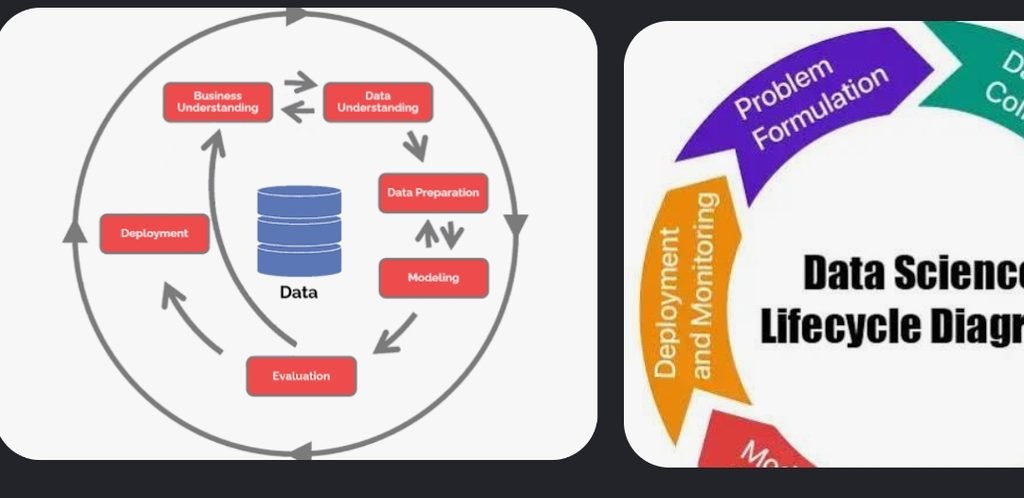
Model evaluation is a continuous cycle rather than a final step before deployment. By choosing the right metrics, adapting to generative AI requirements, and monitoring production performance, you can build machine learning systems that are accurate, reliable, and fair.
If you want to tailor this content for a specific audience, tell me:
- Are you focusing on traditional machine learning or generative AI/LLMs?
- Who is the target audience? (e.g., technical developers, business stakeholders, or students)
- What is the preferred tone? (e.g., deeply technical with code examples, or high-level and strategic)
I can easily adjust the text to perfectly match your platform.


Leave a Reply
You must be logged in to post a comment.