

Introduction
Backend development plays an important role in modern web applications. While the frontend provides the user interface, the backend manages application logic, processes requests, handles data, and communicates with databases. One of the most common ways to establish communication between different parts of an application is through REST APIs.
As part of my internship at Valentius Kryptix, I worked on the REST API with Node.js task, where I developed a Task Management API using Node.js, Express.js, and MongoDB. This project helped me understand how backend applications work and how different API operations are implemented in real-world development.
In this blog, I am sharing my implementation approach, the technologies I used, the important concepts I learned, and the challenges I explored during development.
What is a REST API?
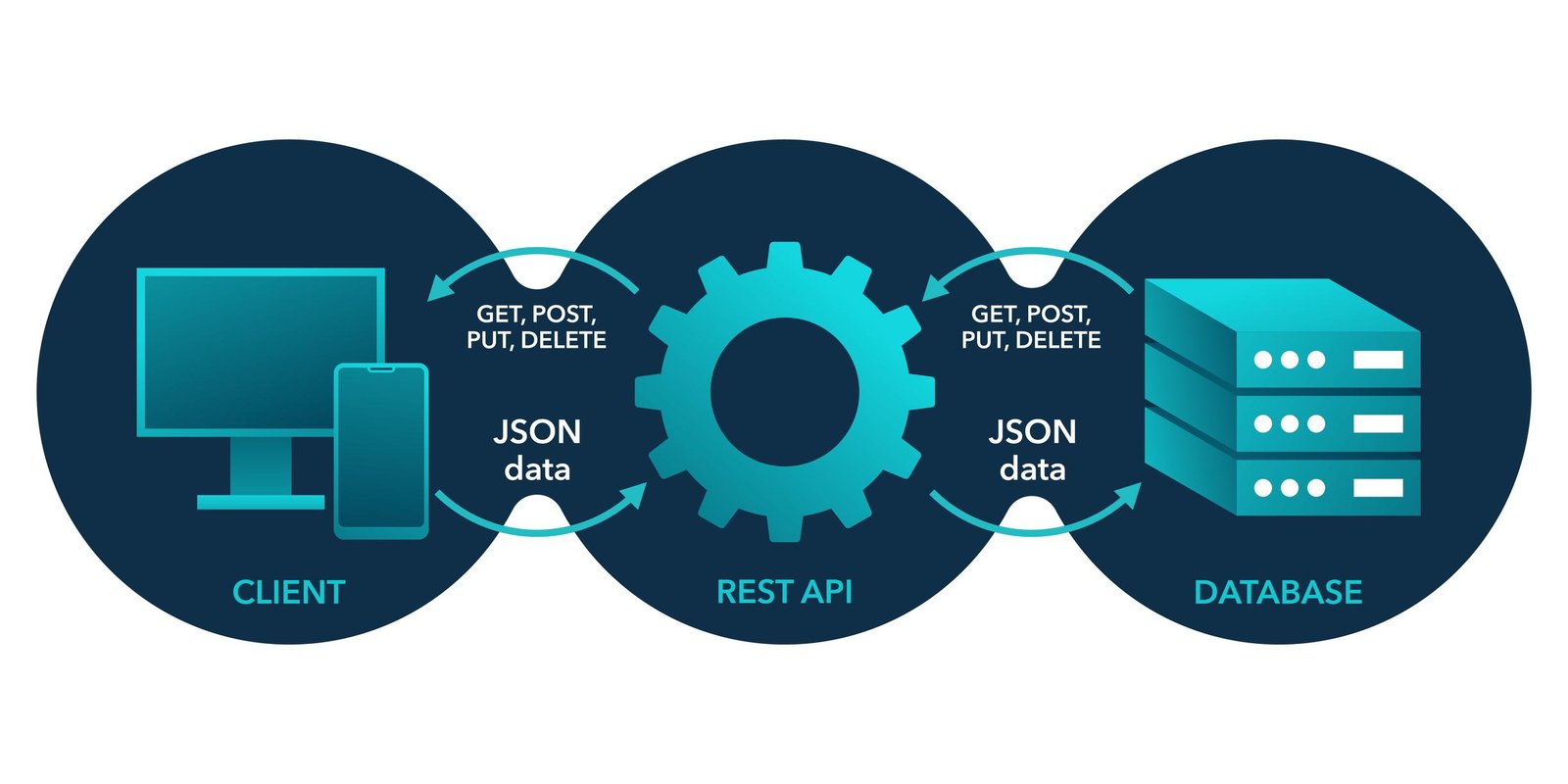
REST stands for Representational State Transfer. It is an architectural style used to design web services that allow different applications to communicate over HTTP.
A REST API receives requests from clients, processes them on the server, interacts with the database when required, and returns appropriate responses.
REST APIs commonly use the following HTTP methods:
- GET: Retrieves information from the server.
- POST: Creates new resources.
- PUT: Updates existing resources.
- PATCH: Updates specific fields of a resource.
- DELETE: Removes resources.
These methods make it easier to organize backend operations and build applications that are scalable and maintainable.
Technologies Used
For this project, I worked with the following technologies:
1. Node.js
Node.js is a JavaScript runtime environment that allows developers to execute JavaScript outside the browser. I used it to implement the backend application and handle server-side operations.
2. Express.js
Express.js is a lightweight web framework for Node.js. It simplifies API development by providing routing, middleware support, and request-response handling.
3. MongoDB
MongoDB is a NoSQL database that stores information in flexible, document-based structures. I used MongoDB to manage application data.
4. bcrypt
Password hashing is an important part of application security. bcrypt helps securely hash passwords before storing them in the database.
5. JSON Web Token (JWT)
JWT is used for authentication and authorization. It allows the server to verify authenticated users when they access protected API endpoints.
Project Overview: Task Management REST API
The main objective of my project was to develop a backend API that supports user authentication and task management operations.
The application provides functionality for users to register, log in, and manage their tasks through API requests.
The major features include:
- User registration and login.
- Secure password hashing.
- JWT-based authentication.
- Protected API routes.
- Creating new tasks.
- Retrieving existing tasks.
- Updating task details.
- Deleting tasks.
- Managing user-specific task access.
The project helped me understand how multiple backend components work together to provide functionality to an application.
How I Implemented the REST API
Step 1: Setting Up the Backend
I started by creating the Node.js project and installing the required dependencies. Express.js was used to configure the server and define API routes.
The backend was organized into different logical components to make the application easier to understand and maintain.
Step 2: Connecting the Database
MongoDB was integrated to store user and task information. Database models help define the structure of the data and provide a convenient way to interact with stored documents.
Step 3: Implementing User Authentication
I implemented registration and login functionality. Passwords are hashed using bcrypt instead of storing them as plain text.
After successful login, JWT-based authentication is used to identify users and protect restricted API endpoints.
Step 4: Implementing CRUD Operations
CRUD stands for Create, Read, Update, and Delete. These are the fundamental operations used to manage application data.
In this project, I implemented these operations for task management. Users can create tasks, retrieve their tasks, update task information, and delete tasks when they are no longer required.
Step 5: Testing API Functionality
Testing is an important part of backend development. Each endpoint needs to be checked with different requests and input values.
I focused on understanding request handling, response structures, authentication requirements, and error handling while working with the API.
Key Learnings and Technical Concepts
This project gave me practical exposure to several important backend development concepts.
1. Understanding REST API Architecture
I learned how HTTP methods, endpoints, requests, and responses work together. I also understood the importance of designing clear and consistent API routes.
2. Authentication and Authorization
I gained practical knowledge of JWT authentication and password hashing using bcrypt. I also understood why protected routes are necessary to prevent unauthorized access.
3. Database Integration
Working with MongoDB helped me understand how backend applications store, retrieve, and update information. I also learned the importance of organizing database operations properly.
4. Middleware and Request Handling
Express.js middleware helped me understand how requests can be processed before reaching the final route handler. This is especially useful for authentication and validation.
5. CRUD Operations
Implementing CRUD functionality strengthened my understanding of how applications manage data through API endpoints.
Challenges and Improvements
During backend development, understanding the complete request-response flow was one of the important learning experiences.
Authentication, database connectivity, and handling different API requests require careful implementation. I also learned that validating incoming data and returning meaningful error responses are important for building reliable APIs.
There are several improvements that can make the project more robust, including adding comprehensive input validation, structured logging, automated API testing, pagination, and improved error handling.
These improvements would help make the application easier to maintain and more suitable for real-world usage.
Conclusion
Working on the REST API with Node.js task was a valuable learning experience during my internship at Valentius Kryptix.
Building a Task Management API helped me connect theoretical backend concepts with practical implementation. From setting up an Express server to integrating MongoDB and implementing authentication and CRUD operations, every step improved my understanding of backend development.
I look forward to exploring more advanced backend concepts, improving my API development skills, and building scalable applications.
I would like to thank Valentius Kryptix for providing this opportunity to learn and gain hands-on development experience.
Project Repository:
https://github.com/chinari20/crudOperations
Technologies: Node.js | Express.js | MongoDB | JWT | bcrypt
#NodeJS #ExpressJS #RESTAPI #MongoDB #BackendDevelopment #WebDevelopment #Internship #ValentiusKryptix

Leave a Reply
You must be logged in to post a comment.