


Introduction
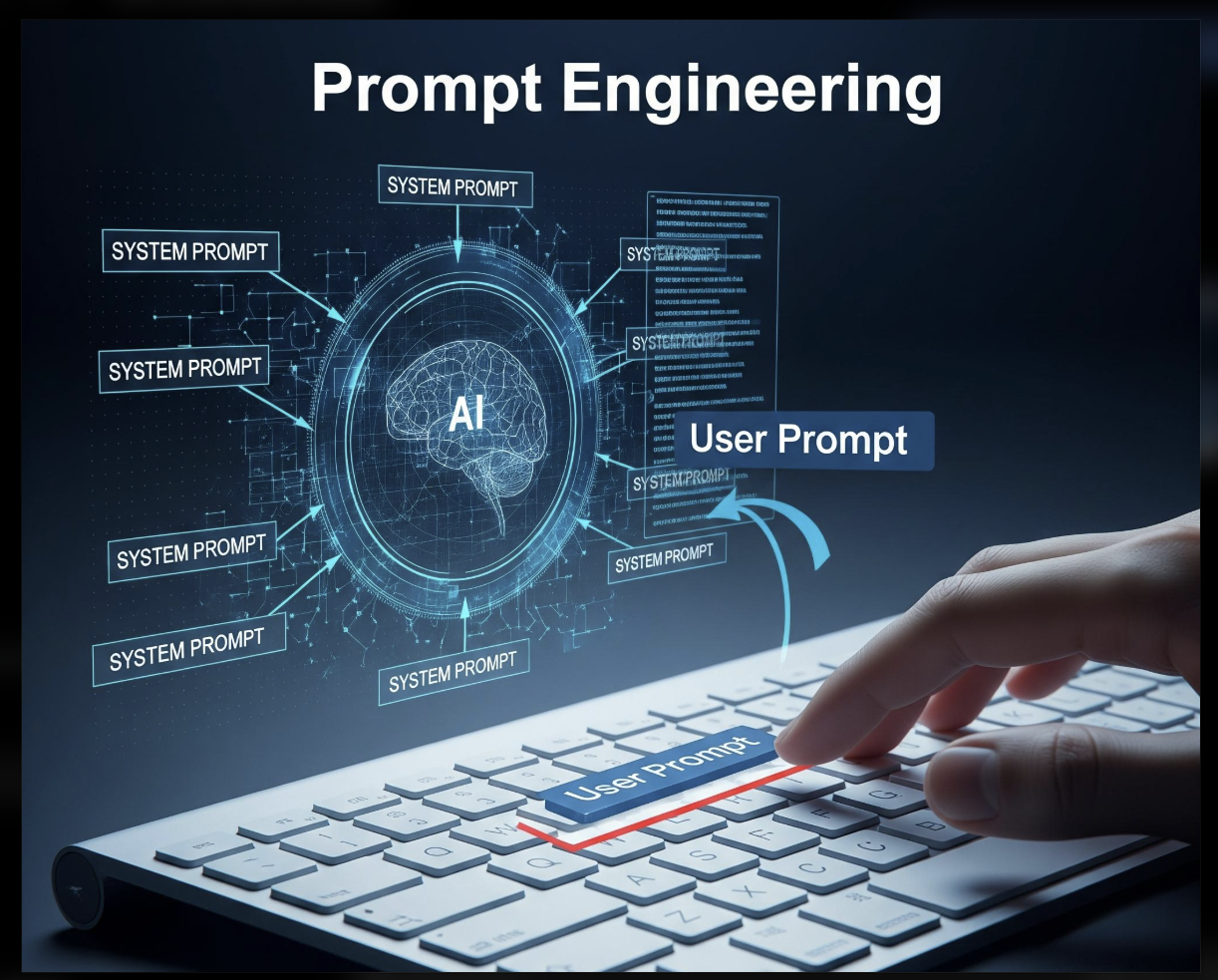
Have you ever asked an AI chatbot a question and received an answer that wasn’t quite what you expected? Sometimes, the problem isn’t the AI model itself but the way we communicate with it. This is where Prompt Engineering comes into play.
As part of my AI internship at Valentius Kryptix, I recently completed a task on Prompt Engineering. It helped me explore how the way we structure our instructions can influence the quality and relevance of AI-generated responses.
What is Prompt Engineering?
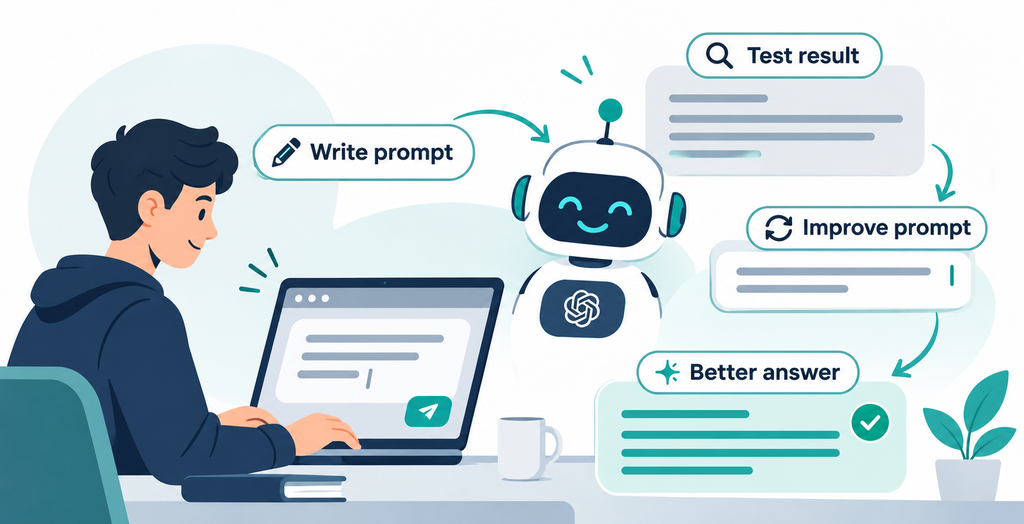
Prompt Engineering is the process of designing and refining instructions given to AI models to obtain better responses.
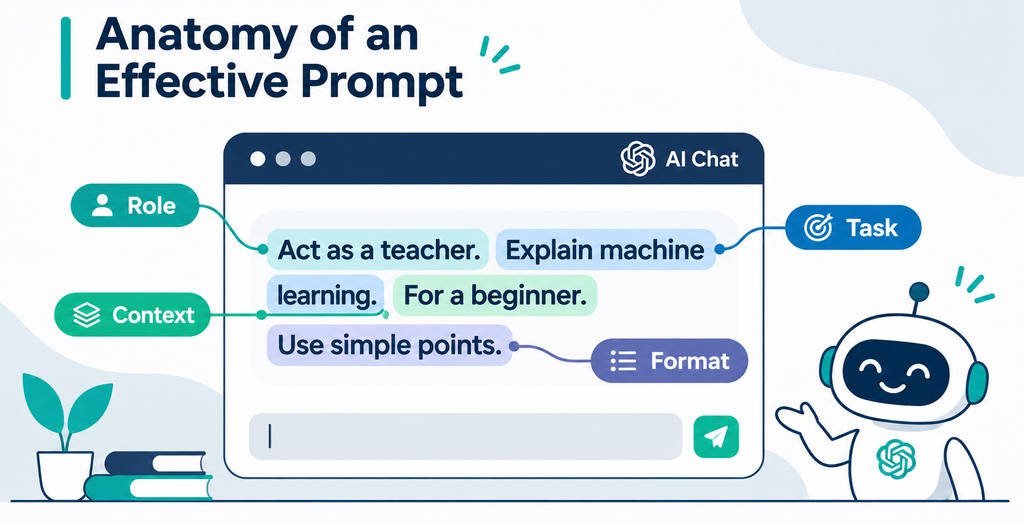
Instead of simply asking a question, we provide the AI with a clear objective, relevant context, and specific instructions about what we expect.
For example, consider these two prompts:
Basic prompt:
“Explain Machine Learning.”
Improved prompt:
“Explain Machine Learning to a beginner using simple language and a real-world example. Keep the explanation within 150 words.”
The second prompt gives the AI a clearer understanding of the audience, requirements, and expected output. This simple difference can make the response more useful.
Common Prompt Engineering Techniques
1. Zero-Shot Prompting
This involves asking an AI model to perform a task without providing any examples.
For instance, asking an AI to classify a customer review as positive, negative, or neutral is a simple example of zero-shot prompting.
2. Few-Shot Prompting
In this technique, we provide a few examples along with the instruction. These examples help the AI understand the expected pattern and response format.
This is particularly useful for classification, information extraction, and content generation.
3. Role-Based Prompting
Here, we assign a specific role to the AI.
For example, starting a prompt with “Act as a Python developer” or “Act as a data analyst” helps guide the AI towards a particular perspective and response style.
4. Structured Output Prompting
Structured Output Prompting involves instructing an AI model to return responses in a specific format, such as JSON, tables, or bullet points.
During my internship assignment, I experimented with extracting customer information from invoice-related text and converting it into structured JSON.
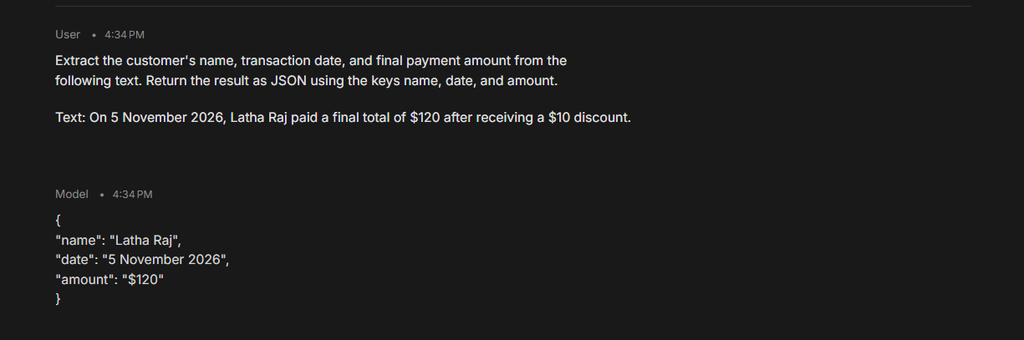
Case 1: Basic Prompt
Initially, I instructed the model to extract the customer’s name, transaction date, and payment amount in JSON format. Although the model extracted the correct information, the date was not standardized, and the amount was returned as a string containing a currency symbol.
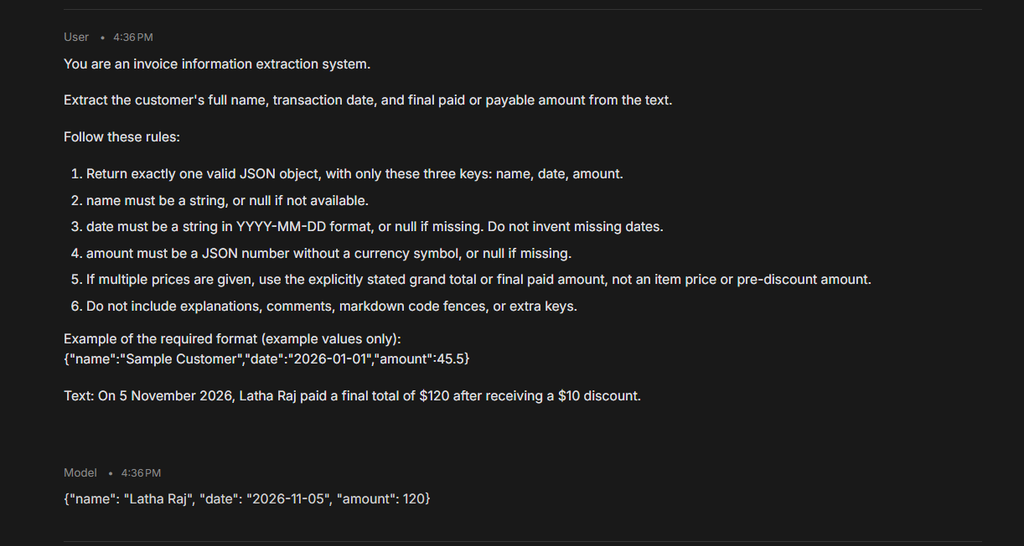
Case 2: Refined Prompt
I improved the prompt by defining specific rules for data types, date formatting, missing values, and payment amount selection. I also provided an example of the expected JSON structure.
The refined prompt produced a standardized date in YYYY-MM-DD format and returned the payment amount as a numerical value without the currency symbol.
This experiment showed me that obtaining a correct answer is not always enough. In AI application development, the structure and consistency of the response are equally important. Clearly defined instructions can reduce additional data processing and make LLM integration more practical.
5. Prompt Chaining
Instead of asking the AI to complete a complex task at once, prompt chaining breaks it into smaller, manageable steps.
For example, a resume analysis application could first extract candidate information, then identify technical skills, and finally compare them against job requirements.
Real-World Applications
Prompt Engineering is useful in several areas, including:
- AI chatbots and virtual assistants.
- Code generation and debugging.
- Document summarization and information extraction.
- Data analysis and report generation.
- Personalized learning and content creation.
When developing AI-powered applications, well-designed prompts can help connect language models with practical software workflows.
What I Learned
One important takeaway from this task is that longer prompts are not necessarily better prompts. What matters more is clarity, relevant context, and a well-defined objective.
Prompt Engineering also requires experimentation. Testing different instructions, comparing responses, and identifying weaknesses are important parts of the process.
However, even a carefully designed prompt cannot guarantee a completely accurate response. AI models can still generate incorrect information, making human verification and output validation essential.
Conclusion
Prompt Engineering is more than just asking questions to AI. It is about understanding how to communicate our requirements effectively and refining that communication to achieve better results.
Completing this task at Valentius Kryptix has strengthened my understanding of how prompts contribute to AI application development. I look forward to applying these concepts in future projects and exploring more advanced areas of Generative AI.
References:


Leave a Reply
You must be logged in to post a comment.