

Introduction
Authentication is one of the most important parts of modern web applications. Almost every application that allows users to create accounts, log in, or access personal information needs a reliable authentication system. Without proper authentication, user accounts and sensitive information can be exposed to unauthorized access.
As part of my internship work at Valentius Kryptix, I have been working on an Authentication System as part of a Task Management API project. The main objective of this work is to understand how authentication works on the backend and how different security techniques can be used to protect user accounts and application resources.
In this blog, I will discuss the authentication concepts, technologies, and important techniques involved in developing a secure backend authentication system.
What Is an Authentication System?
An authentication system verifies the identity of a user before allowing them to access an application or its protected resources.
For example, when a user enters an email address and password on a login page, the backend checks whether the provided credentials match the registered account. If the credentials are valid, the application can provide an authentication token that allows the user to access authorized routes.
A well-designed authentication system helps protect user data, control access, and improve the overall security of an application.
Technologies Used
The project uses backend technologies that are commonly used in modern web development:
- Node.js: A JavaScript runtime used to build the backend application.
- Express.js: A lightweight framework used to create API routes and handle HTTP requests.
- PostgreSQL: A relational database used to store application and user information.
- bcryptjs: A library used for securely hashing passwords.
- JSON Web Token (JWT): A token-based approach used for authentication and protected API access.
These technologies work together to support the backend authentication process.
Understanding the Authentication Workflow
The authentication process generally involves several important steps.
1. User Registration
The registration process allows a new user to create an account by providing details such as their name, email address, and password.
Before saving the information, the backend should validate the submitted data. It should also check whether the email address is already registered. This helps prevent duplicate accounts and invalid input.
2. Password Hashing
Storing passwords as plain text is a serious security risk. If a database is exposed, attackers could directly read the stored passwords.
To reduce this risk, password hashing is used. Libraries such as bcryptjs convert passwords into secure hashes before they are stored in the database.
During login, the submitted password is compared with the stored hash using the appropriate verification function. The original password does not need to be stored in the database.
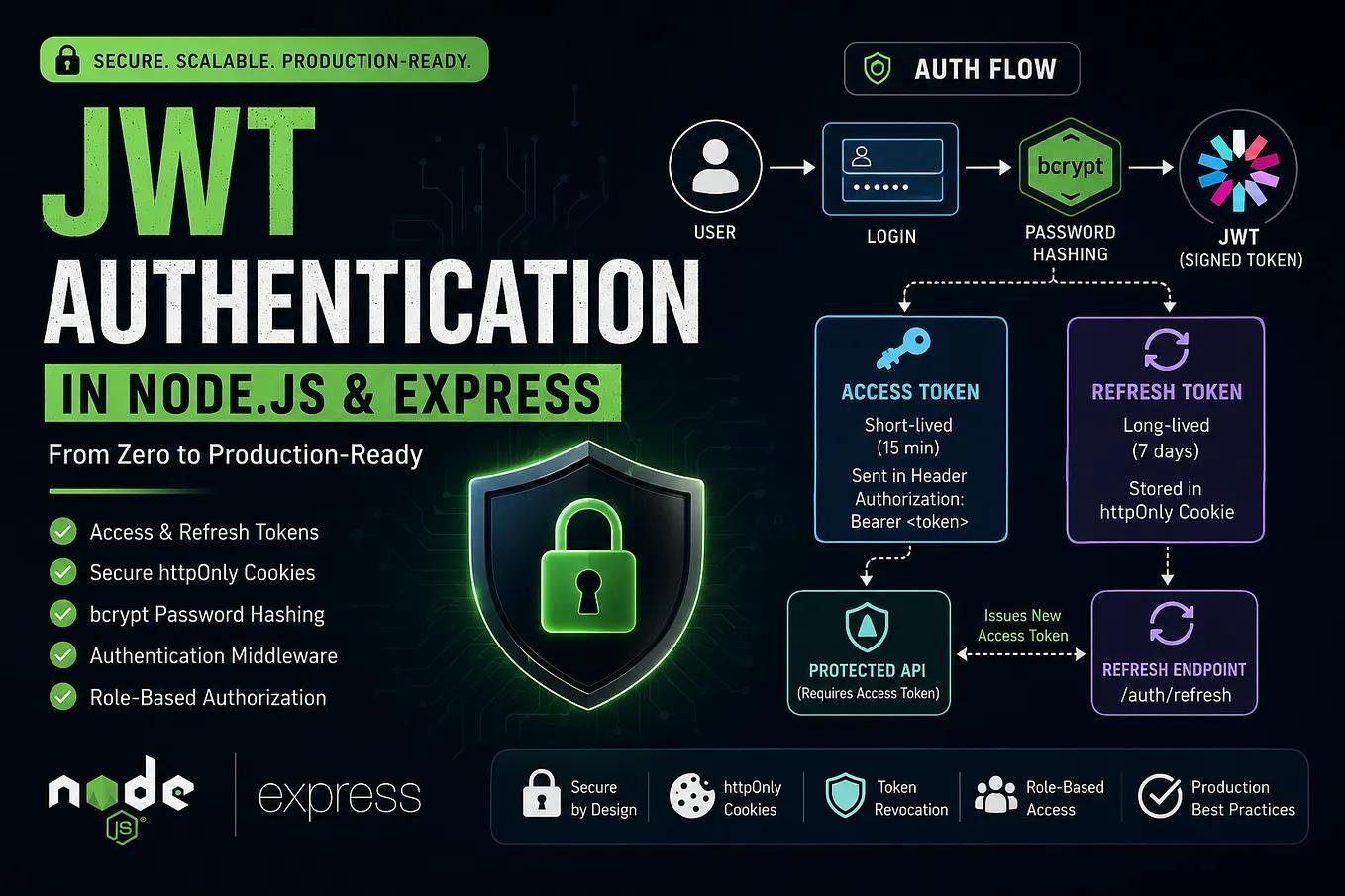
3. User Login and JWT Authentication
When a registered user attempts to log in, the backend verifies their credentials.
If the credentials are correct, the application can generate a JSON Web Token (JWT). This token represents the authenticated session and can be used when accessing protected API routes.
JWTs should have an appropriate expiration time and must be handled securely by the client application.
4. Protected API Routes
Not every API endpoint should be accessible to everyone. Some routes may contain personal or user-specific information.
Authentication middleware can verify the JWT included in a request. If the token is missing, invalid, or expired, the request should be rejected. Valid tokens allow the request to continue to the relevant route.
5. Email Verification and Password Recovery
Email verification and password recovery are additional features that can improve account security and usability.
Email verification helps confirm that a user has access to the registered email address. Password recovery allows users to reset their password when they forget it.
These features should use secure, time-limited tokens and carefully validate each request before making account changes.
Key Learnings During Development
Working on this project has helped me understand several important backend development concepts:
1. Secure Password Handling: I learned why passwords should never be stored as plain text and how password hashing with bcryptjs helps protect user credentials.
2. JWT-Based Authentication: I gained a better understanding of how JWTs are generated, verified, and used to protect API endpoints.
3. Backend Middleware and Validation: I learned how middleware helps organize authentication logic and how request validation improves API reliability.
4. Database Integration: Working with PostgreSQL helped me understand how backend applications manage and retrieve user-related information.
Why Security Matters
Authentication is not just about creating a login endpoint. A secure implementation also needs proper input validation, password hashing, token expiration, authorization checks, and safe error handling.
Developers should avoid exposing passwords, secret keys, or authentication tokens in logs, public repositories, and screenshots. Sensitive configuration values should be stored in environment variables.
It is also important to test both successful and unsuccessful authentication requests to ensure that unauthorized users cannot access protected resources.
Conclusion
Building an Authentication System is an important learning experience for anyone interested in backend and full-stack development. It provides practical knowledge of password security, JWT authentication, API middleware, database integration, and secure application design.
Through my internship work at Valentius Kryptix, I am improving my understanding of how backend authentication systems are structured and how security practices can be applied in real-world projects.
Project Repository:
https://github.com/nitinpratap007/task-management-api
I look forward to learning more, improving my development skills, and building more secure and reliable applications.
#ValentiusKryptix #Internship #NodeJS #ExpressJS #PostgreSQL #JWT #BackendDevelopment #WebDevelopment


Leave a Reply
You must be logged in to post a comment.