

B2B SaaS is one of the strongest conceptual fits for ChatGPT Ads, because software buyers already do exactly what this channel is built around, describing a problem in detail and asking for options, rather than typing a two-word search term. But there’s a real constraint specific to this category: the buyers most worth reaching are often the ones least likely to see your ad, because they’re using a company-paid ChatGPT seat that’s ad-free by design. This playbook covers both sides honestly, where the fit is genuinely strong, and where it structurally isn’t yet.
Key takeaways:
- SaaS buyers researching solutions in detail hand over far richer signal in a ChatGPT conversation than in a search query, company size, current workarounds, specific requirements, all in one message.
- The catch: Plus, Pro, Business, and Enterprise ChatGPT users don’t see ads at all. A senior buyer on a company-paid seat structurally won’t see your campaign, no matter how well-targeted it is.
- Product-led, self-serve, and SMB-focused SaaS tend to fit better than committee-sold enterprise software, precisely because of that reach constraint.
- Context hints for SaaS should describe a buyer’s situation, team size, current pain, budget range, not a product category.
- Track pipeline, not clicks. SaaS sales cycles routinely outlast a typical ad campaign’s measurement window, and a cheap click that never becomes a qualified lead isn’t a result worth celebrating.
For the broader picture on ChatGPT Ads in India beyond this vertical, see our complete guide.
Why SaaS Buyers Are a Strong Match for ChatGPT Ads
Software buyers are unusually well-suited to this channel because the decision itself is naturally conversational. Someone comparing project management tools doesn’t just want a list of names, they want to know what fits a team their size, at their budget, given whatever’s currently going wrong. Ask ChatGPT “what project management tool should a 15-person team use” and you’ll typically get a follow-up question back before a recommendation, because the honest answer depends on details a search engine never asks for and a search query never provides.
That’s the opening for a well-matched ad: a founder describing team size, current tooling frustrations, and budget constraints in a single message is handing over more usable buying signal than most SaaS companies get from an entire top-of-funnel search campaign. The commercial context is already there in the conversation, the job of the ad is just to be genuinely relevant to it.
The Catch, Your Enterprise Buyers May Not See Your Ads
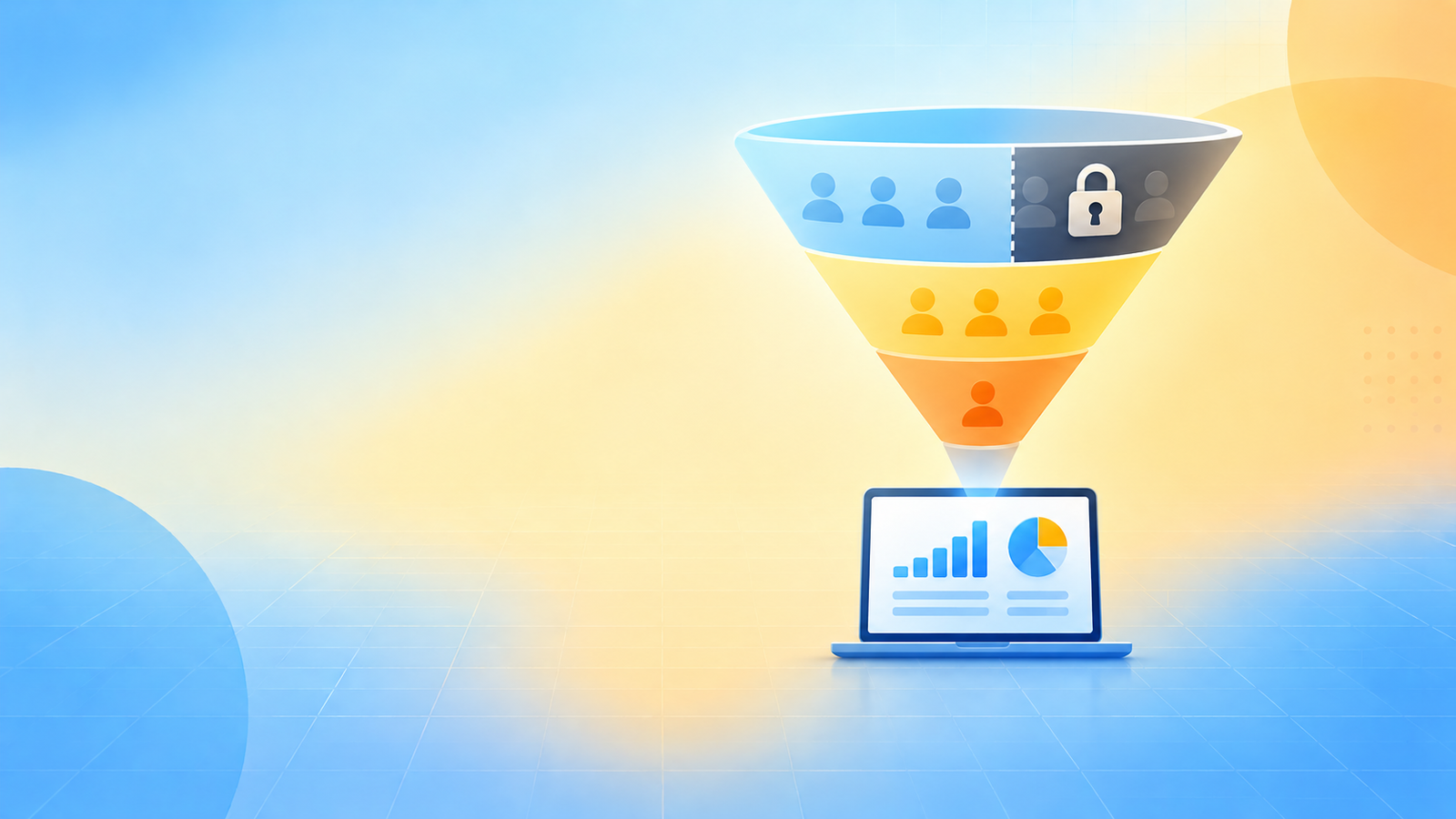
This is the constraint every other guide to this topic skips, and it’s the one that can quietly waste a SaaS company’s entire campaign budget if nobody flags it upfront: ads only appear on the Free and Go tiers. Plus, Pro, Business, and Enterprise subscribers don’t see ads at all, on any plan, regardless of settings.
Free/Go Tier Reach vs. Where SaaS Decision-Makers Actually Sit
For a lot of SaaS companies, this matters more than it would for a consumer brand. A VP of Engineering or Head of Ops at a funded company often has ChatGPT provisioned through a company Business or Enterprise account, the exact account type that’s structurally ad-free. If your buyer persona is “senior decision-maker at a well-resourced company,” there’s a real chance a meaningful share of your actual audience can’t see your campaign no matter how good your context hint is.
The picture is different for smaller, self-serve, or bootstrapped buyers. A startup founder, a freelancer managing their own tools, or a small team lead evaluating software without an IT-provisioned Enterprise seat is much more likely to be on ChatGPT’s Free or Go tier. If your product sells to that segment, which describes a large share of the SaaS market, not a niche of it, this constraint matters less. Work out honestly, before you launch, which side of that line your actual buyer sits on. It’s the single highest-leverage question in this entire playbook, and it’s worth revisiting our general readiness framework with this specific lens before committing budget.
Writing Context Hints for Software Buyers
Context hints for SaaS should describe a buyer’s situation, not a product category, the same discipline covered in our full guide to how ChatGPT Ads work, applied specifically to software buyers here. A weak SaaS context hint reads like a category name: “project management software.” A strong one reads like a real customer profile: “project management software for agencies under 15 people still tracking projects in spreadsheets, looking for something affordable that doesn’t require a steep learning curve.”
Picture the actual conversation this is meant to match: a founder running a 10-person agency asks ChatGPT for help because spreadsheets have stopped working and their budget for a new tool is under ₹15,000 a month. That single sentence hands over team size, current workaround, pain point, and budget ceiling, everything a context hint like the one above is built to match against. Compare that to a context hint that just says “project management software” and could plausibly match a solo freelancer, a 500-person enterprise, or anyone in between: broad reach, weak relevance, and a worse result on the same budget.
Don’t stop at one context hint per product either. The same tool can be worth pitching on different angles depending on the situation it’s matching, time saved for a team drowning in manual work, ease of onboarding for a team that’s tried and abandoned other tools before, or straightforward cost relative to what they’re currently paying for a worse solution. A single generic pitch tends to underperform two or three genuinely different angles tested against each other, the same lesson that applies to ad creative on any platform.
Landing Page Strategy for SaaS, Match the Query, Not the Homepage
A SaaS homepage is built to serve every visitor at once, pricing tiers, feature lists, testimonials from three different industries, a hero section trying to speak to everyone simultaneously. That’s exactly the wrong destination for a click that arrived with specific context attached. If your context hint targets “agencies under 15 people still using spreadsheets,” the landing page should speak to that person directly, their team size, their specific pain, their budget range, not restate your general value proposition and make them re-explain what they need.
This matters more for SaaS than most categories, because the sales cycle is longer and the first landing page interaction often isn’t the only touchpoint before a signup, it’s setting up trust for a trial, a demo booking, or a follow-up email sequence. A generic landing page doesn’t just lose the click; it weakens every touchpoint that follows it.
It’s also worth matching the call-to-action itself to how far along the visitor sounds, rather than defaulting to “book a demo” for everyone:
| Where the conversation sounds like it’s at | CTA worth testing |
|---|---|
| Early research, just learning the category | A guide or explainer, not a hard sell |
| Comparing specific alternatives | A comparison page or feature breakdown |
| Genuinely evaluating your product | Start a free trial |
| Enterprise buyer, higher ACV | Book a demo |
| Technical evaluator | Documentation or integration details |
A prospect asking a broad exploratory question and one already comparing your product by name are in very different places, sending both to “Book a Demo” wastes the first and slows down the second.
Which SaaS Categories Fit Best Right Now
Given the Free/Go tier constraint above, some SaaS shapes fit this channel meaningfully better than others right now. Product-led, self-serve tools, where the person researching is also the person who’ll click “start free trial” without needing procurement sign-off, tend to fit well, because that buyer profile skews toward individual or Go-tier accounts. SMB and startup-focused software generally fits better than enterprise-only software, for the same reason. Tools with a lower entry price point and a shorter sales cycle produce a usable result faster than six-month enterprise sales processes, which is particularly relevant while you’re still learning whether this channel works for you at all.
A few concrete categories worth naming rather than speaking abstractly about “SaaS” as one thing: accounting and invoicing tools for small businesses, HR and payroll platforms for growing teams, developer and productivity tools with self-serve signup, marketing and design tools sold to individual practitioners or small teams, and vertical SaaS built for a specific industry’s workflow all tend to fit the profile above, a buyer researching and deciding without needing three layers of internal approval first. Pure enterprise infrastructure, security tooling sold only to large IT departments, and anything requiring a lengthy procurement and compliance review before a single seat gets provisioned sit at the other end of that spectrum.
Committee-sold, high-ACV enterprise software isn’t ruled out, but expect a longer runway before you can judge results, and go in knowing a meaningful share of your actual decision-makers may be on ad-free seats. If that’s your category, treat this channel as a smaller, longer-term test rather than a primary acquisition line, at least until you have real data showing otherwise.
What This Means for Your CAC Expectations
SaaS companies tend to think in customer acquisition cost, not cost per click, and it’s worth translating early rather than after a disappointing first report. Our cost guide covers the full pricing detail, but the short version for this vertical: converted international guidance puts ChatGPT Ads clicks at ₹285–475, which is a real cost per click, not a cost per trial or cost per customer. If your existing CAC benchmarks from Google or Meta already tell you roughly what a trial signup or a closed deal costs to acquire, use that same math here rather than judging the channel on click price alone, a more expensive click that arrives further along in genuine research can still produce a lower CAC than a cheaper one that never converts.
Measuring Pipeline Impact, Not Just Clicks
SaaS has a structural measurement problem that shows up on every paid channel, not just this one, but it’s worth naming explicitly here: the sales cycle regularly outlasts the campaign’s own reporting window. A cheap click that never converts to a trial is worse than an expensive click that becomes a paying customer three months later, but a dashboard showing CTR and CPC won’t tell you which is which.
It helps to think in stages rather than one flat number: impressions and spend tell you whether the campaign is delivering at all; clicks and CTR tell you whether the message is landing; trial or demo signups tell you whether the landing page is converting; and qualified leads, opportunities, and closed revenue tell you whether any of it actually matters to the business. Each stage answers a genuinely different question, and a campaign can look great on one and mediocre on the next, cheap, plentiful clicks that never turn into qualified leads are a worse outcome than fewer, pricier clicks that do.
Track signups and demo bookings through OpenAI’s pixel or Conversions API as a starting signal, but don’t stop there. Tag every lead with its source and follow it through your CRM to an actual outcome, trial-to-paid conversion, deal closed, revenue, even if that resolution happens weeks after the ad spend did. A campaign that looks disappointing on day-14 clicks-and-CTR alone might look completely different once you can see which of those clicks actually became pipeline. For the fuller mechanics of setting this tracking up correctly from day one, see our setup guide.
Worth knowing too: SaaS buyers research unusually heavily before committing, which means being cited or recommended inside a ChatGPT answer organically, not just paying for a placement below it, can matter just as much as the ad itself. Our guide to ChatGPT Ads and GEO covers that unpaid side of AI visibility, worth pairing with a paid test rather than treating as a separate decision.
A Sample Campaign Structure for a SaaS Product
Take a project management tool selling primarily to small agencies and growing startups. Rather than one broad campaign, this is the kind of structure worth building: one ad group targeting agencies still managing projects in spreadsheets, with a context hint describing that specific frustration and team size; a second ad group targeting growing startups scaling past their founding team’s informal task-tracking, with a context hint built around that different situation. Each gets its own creative, a title and line of copy matched to that ad group’s specific pain point, and its own landing page, one speaking to agency workflows and client deliverables, the other to startup team scaling and onboarding new hires.
Both ad groups get conversion tracking installed before launch, both run their full planned test window before any conclusions get drawn, and both get judged on trial signups and downstream pipeline, not on which one got cheaper clicks. That’s the shape of a properly built SaaS campaign on this platform: specific situations, not one generic pitch hoping to catch everyone searching near the same category.
The same logic applies if your product has genuinely distinct modules rather than distinct buyer segments, a platform that does CRM, marketing automation, and customer support under one roof shouldn’t put all three into a single ad group either. A buyer researching “how do I automate lead nurturing” and a buyer researching “how do I centralise customer support tickets” are having two different conversations, even if your product answers both. Separate ad groups, separate context hints, separate landing pages, same principle as segmenting by buyer situation, just applied along a different axis.
A Quick SaaS Readiness Check
Beyond our general readiness framework, a few questions specific to this vertical are worth answering honestly before you launch:
- Does a meaningful share of your actual ICP plausibly sit on Free or Go, not exclusively on company-paid seats?
- Do prospects genuinely ask multi-sentence questions about this category, rather than just searching a product name they already know?
- Can you point to a landing page, today, not hypothetically, built for a specific use case rather than your homepage?
- Can your CRM distinguish a raw trial signup from an actually qualified lead?
- Do you know your acceptable CAC for this product, in rupees, before you launch?
- Can sales or onboarding follow up on a qualified lead within a day or two, not a week?
If more than one or two of these come back “no,” that’s not a reason to avoid testing, it’s a reason to fix the gap first, the same logic our general readiness framework applies at the whole-business level.
We started as a SaaS company ourselves before building our paid media practice, which is part of why this vertical is one we understand from the buyer’s side, not just the media-buying side. Valentius Kryptix helps SaaS companies test new acquisition channels without wasting a quarter finding out what doesn’t work. Talk to our team →
Frequently Asked Questions
Yes, particularly product-led, self-serve, and SMB-focused SaaS, where the buyer researching the product is also the one who’ll sign up without procurement involved. Enterprise-only, committee-sold software can still work, but faces the added constraint of senior buyers often being on ad-free company accounts.
Not if they’re on a company-paid Plus, Pro, Business, or Enterprise seat, those tiers are ad-free regardless of settings. This is worth checking honestly before you build a campaign around a senior enterprise buyer persona, since it may exclude a meaningful share of your actual audience.
Ones that describe a specific buyer situation, team size, current workaround, budget range, and the pain driving the search, rather than a product category. “Project management software for agencies under 15 people still using spreadsheets” outperforms “project management software” because it matches an actual conversation, not a keyword.
Demand generation, at least for a first test. The channel’s advantage is reaching someone actively describing a need, which suits a direct-response objective (trial signups, demo bookings) far better than a pure awareness play, save broader brand campaigns for once you understand how the direct-response side performs.
Through OpenAI’s pixel or Conversions API for the initial signup event, combined with your own CRM tagging to follow that lead through to trial-to-paid conversion or a closed deal, since the sales cycle will often outlast the ad platform’s own reporting window. Set this up before launch, not after.

Leave a Reply
You must be logged in to post a comment.