

Introduction
As part of my internship journey at Valentius Kryptix, I worked on building a personal portfolio website to present my skills, projects, learning journey, and development interests in a professional way. A portfolio is more than just a collection of projects. For a student and aspiring developer, it provides an opportunity to demonstrate practical skills, explain the work behind different projects, and create a professional online presence.
For this task, I focused on creating a clean, responsive, and user-friendly portfolio website using HTML, CSS, and JavaScript. The goal was to keep the website simple, professional, responsive across different screen sizes, and easy to navigate.
What I Built
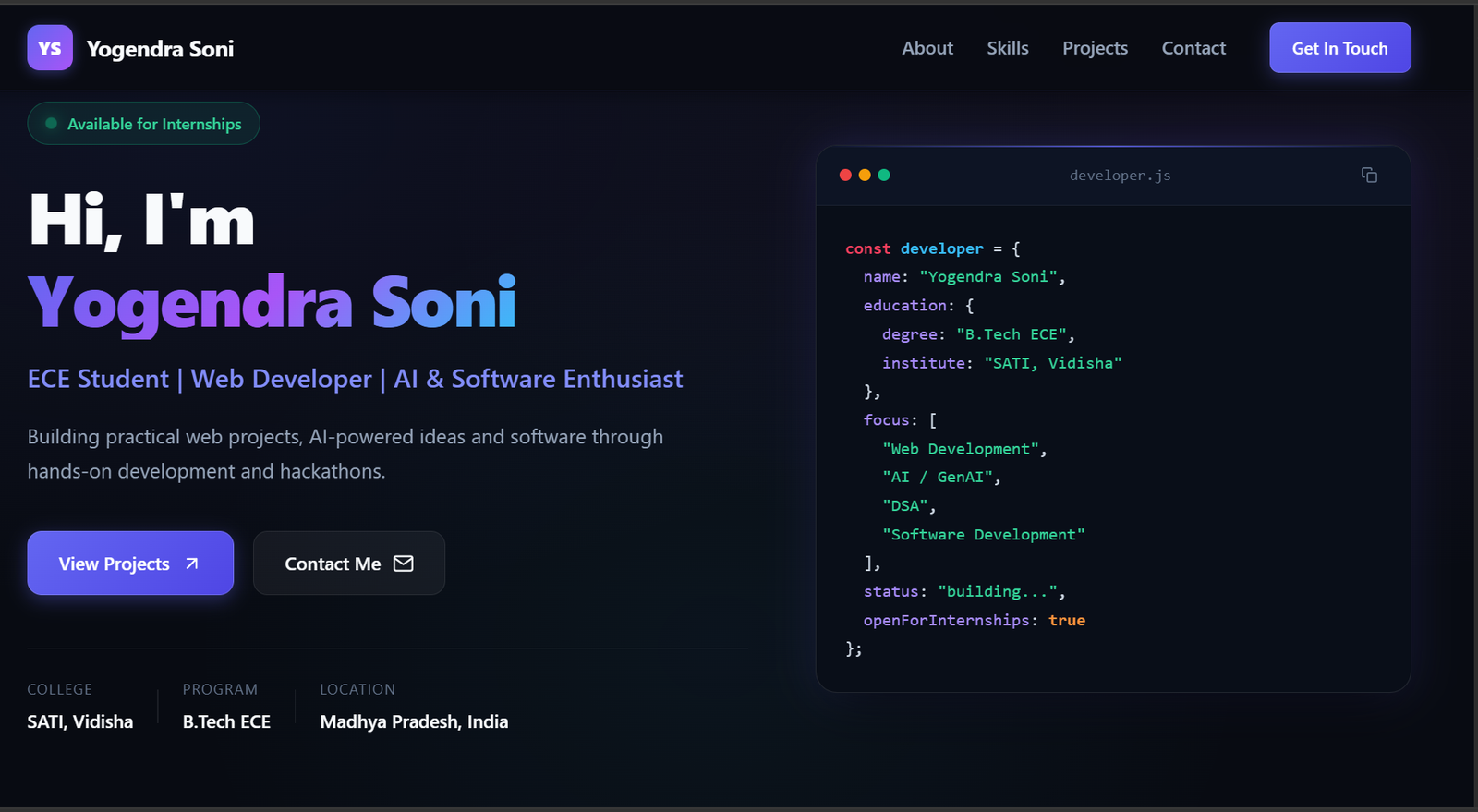
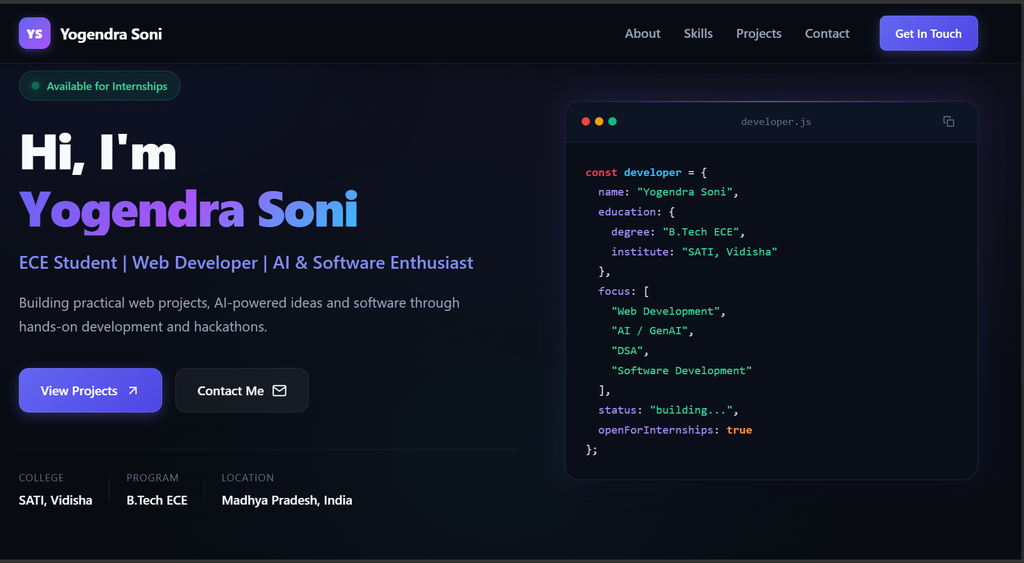
I built a personal portfolio website that introduces me as a B.Tech Electronics and Communication Engineering student at Samrat Ashok Technological Institute, Vidisha. The website includes important sections such as About, Skills, Projects, and Contact.
The Hero section provides a short introduction and gives visitors quick access to the projects and contact sections. I also included an About section where I describe my educational background and my interest in web development, AI, programming, and problem solving.
The Skills section presents the technologies and development areas I am currently learning and working with. This includes HTML, CSS, JavaScript, React, C, Python, Git, GitHub, responsive web development, and AI/GenAI.
One of the most important parts of the website is the Projects section. I showcased projects that I have worked on, including HelpConnect, Delivery Hub, and BattleZone: Last Survivor. These projects represent different areas of my development journey, from AI-powered platforms and web applications to browser-based interactive projects.
The Contact section provides ways for visitors to connect with me through email, GitHub, and LinkedIn.
Design and Responsiveness
While developing the website, I focused on creating a modern and professional interface rather than simply putting information on a page. I used a dark, minimal design with clear typography, spacing, cards, buttons, and visual hierarchy.
Responsiveness was another important part of the development process. The website was designed to work across different screen sizes, including desktop, tablet, and mobile devices. Navigation also adapts to smaller screens with a mobile menu, making the website easier to use on phones.
I also added small JavaScript interactions to improve the user experience. The navigation menu can be opened and closed on mobile devices, and sections of the website use simple reveal animations as the user scrolls through the page.
What I Learned
This task helped me understand that building a good website is not only about writing code. Structure, usability, responsiveness, accessibility, presentation, and deployment are equally important.
I improved my understanding of how HTML provides the structure of a website, how CSS can be used to create responsive layouts and professional visual designs, and how JavaScript can add interaction to an otherwise static website.
I also learned more about organizing a project properly and presenting development work in a way that can be easily understood by recruiters, mentors, and other developers.
Another important learning experience was deployment. Taking a website from the development stage and making it accessible online helped me understand the basic workflow involved in moving a project from local development to a live website.
Mentorship and Guidance
The mentorship and guidance during this task were also valuable. Having direction while working on the project helped me understand how to approach a development assignment more professionally instead of focusing only on completing the code.
The guidance encouraged me to think about the purpose of each section, the user experience, the presentation of my projects, and the overall quality of the final website. This helped me approach the task with more confidence and understand how practical development work differs from simply completing academic exercises.
Conclusion
Building this portfolio website was a useful first step in my internship journey. It allowed me to combine my existing knowledge of HTML, CSS, and JavaScript with practical requirements such as responsive design, project presentation, user experience, and deployment.
More importantly, the task helped me understand areas where I can continue improving as a developer. I want to keep strengthening my frontend and backend development skills, learn more about modern web technologies, and build practical applications that solve real problems.
This portfolio will also continue to evolve as I learn new technologies and complete more projects. The experience of building it has given me a stronger foundation for the upcoming tasks in my Fullstack Web App Development internship at Valentius Kryptix.

Leave a Reply
You must be logged in to post a comment.