

Introduction
REST APIs are an important part of modern web application development because they allow different applications and services to communicate with each other. As part of my internship task at Valentius Kryptix, I built a Task Management REST API using Node.js and Express.js. The project helped me understand how backend applications handle requests, process data, authenticate users, and provide responses through APIs.
The main goal of this project was to create a simple and practical API that supports user authentication and task management operations. The API allows users to register, log in securely, and perform CRUD operations on tasks through protected routes.
Technologies Used
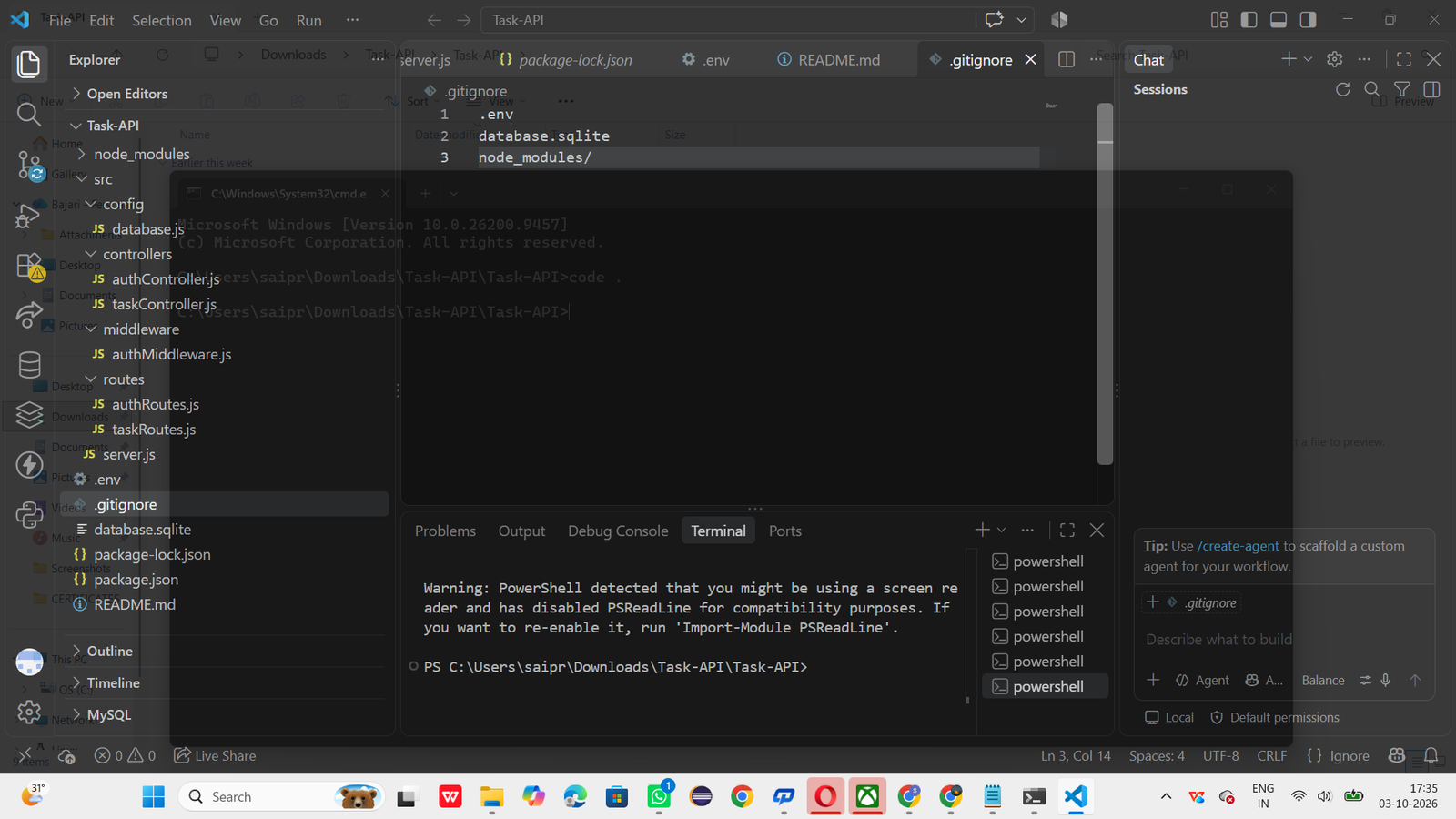
The project was developed using Node.js and Express.js for the backend. SQLite was used as the database for storing application data. Other important technologies and concepts used in the project include bcrypt for password hashing, JSON Web Tokens (JWT) for authentication, and REST principles for designing the API endpoints.
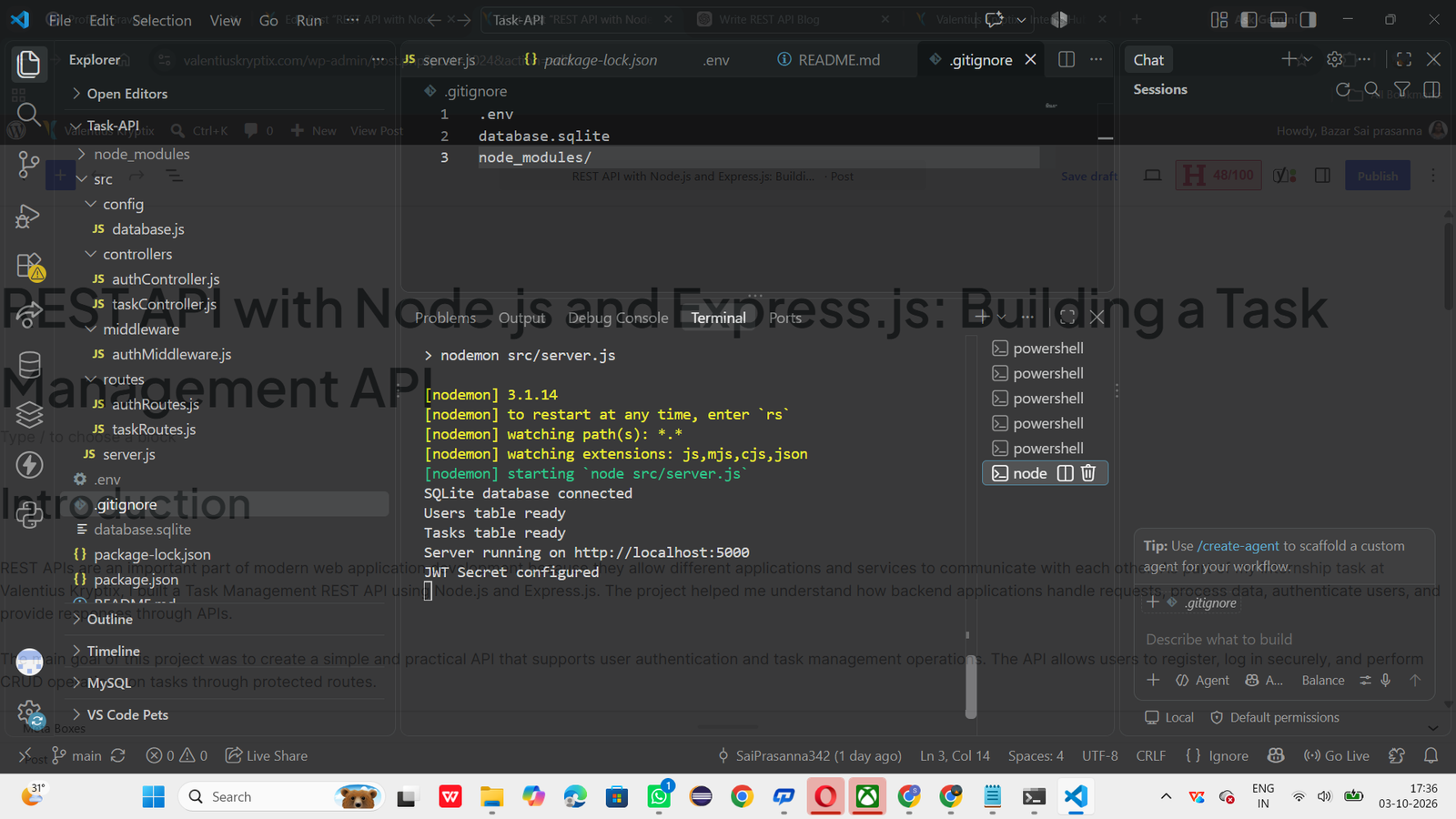
Node.js provides the runtime environment for executing JavaScript on the server, while Express.js makes it easier to create routes and handle HTTP requests and responses.
User Registration and Password Security
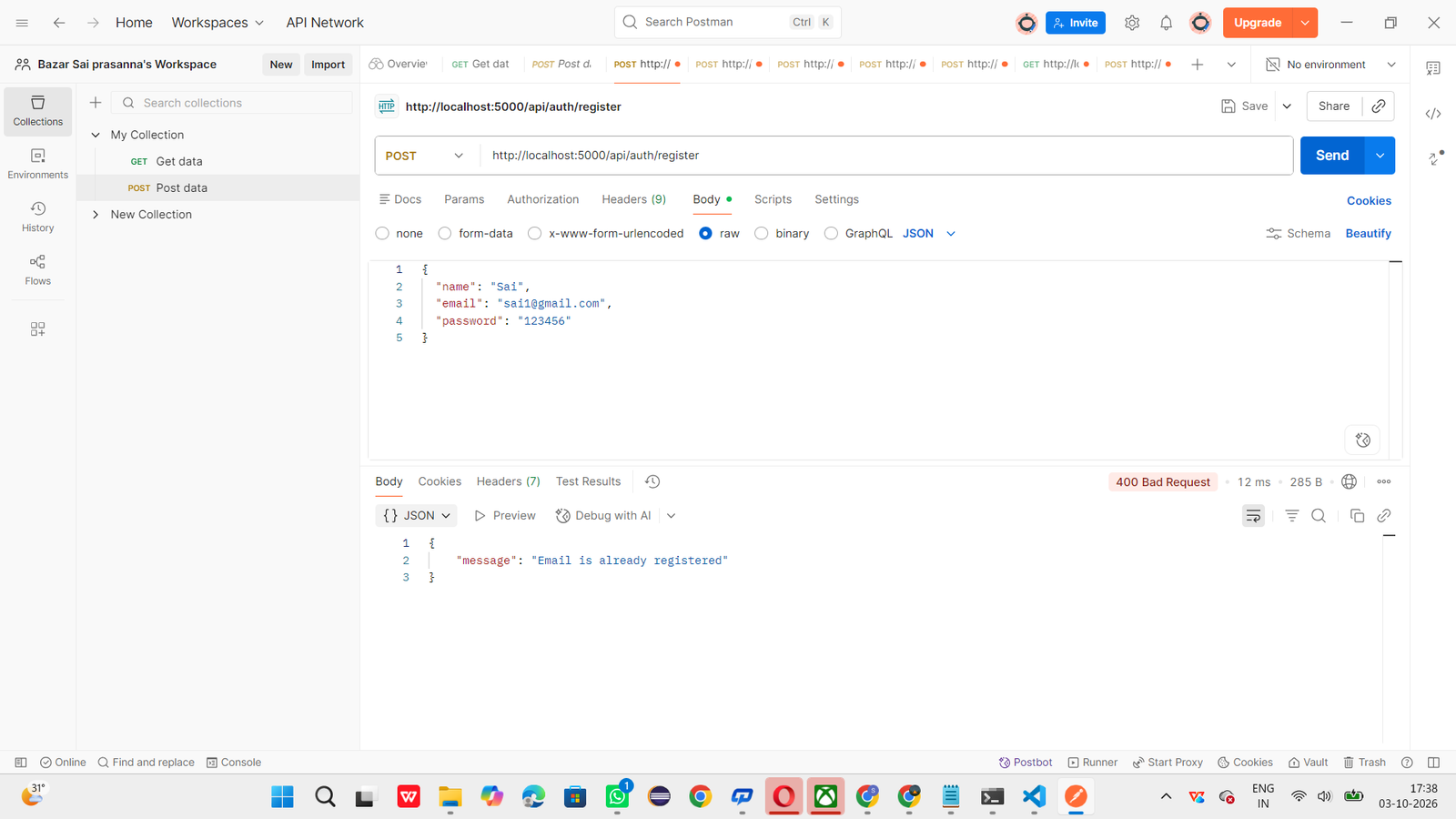
One of the main features of the application is user registration. When a new user registers, the application validates the provided information before creating the account.
For security, passwords are not stored directly in the database. The application uses bcrypt to hash passwords before storing them. Password hashing helps protect user credentials because the original password is not stored as plain text.
During login, the submitted password is compared with the stored hashed password. If the credentials are valid, the user can successfully log in.
JWT Authentication
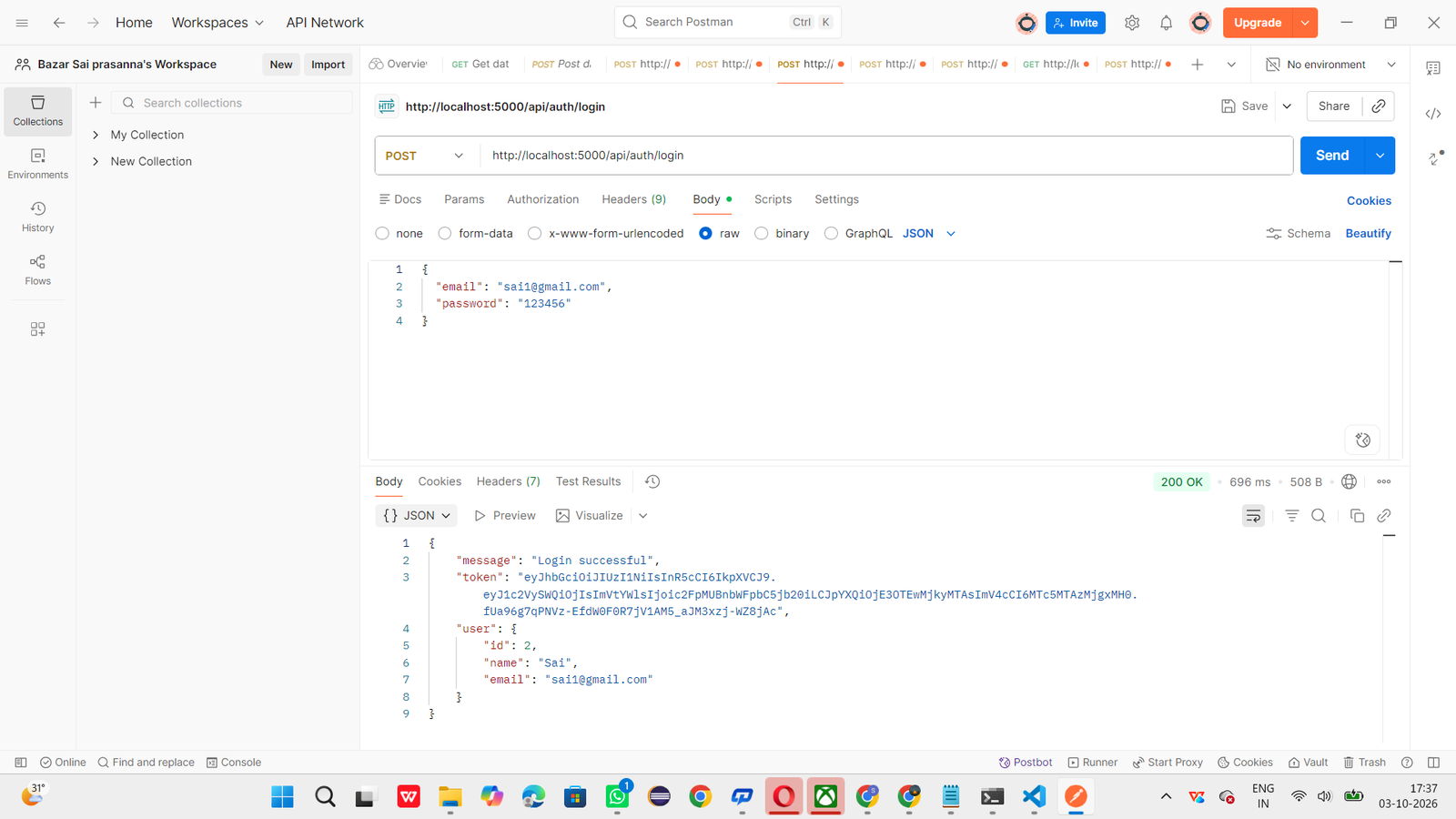
The project also implements authentication using JSON Web Tokens. After a successful login, the server generates a JWT for the authenticated user.
The token is then used when accessing protected API routes. The server checks the token before allowing the user to perform operations that require authentication.
This helped me understand an important concept in backend development: authentication should be handled securely so that protected resources cannot be accessed by unauthorized users.
Task CRUD Operations
The main functionality of the project is task management. The API supports the four basic CRUD operations:
- Create a task
- Read tasks
- Update a task
- Delete a task
A user can create new tasks and retrieve their tasks through API requests. Existing tasks can also be updated when information changes, and unwanted tasks can be deleted.
Using CRUD operations helped me understand how REST APIs work with different HTTP methods such as GET, POST, PUT, and DELETE.
Input Validation and HTTP Status Codes
Input validation was another important part of the project. The API checks incoming data before processing requests. This helps prevent invalid or incomplete information from being stored.
The API also uses appropriate HTTP status codes to communicate the result of each request. For example, successful requests can return status codes such as 200 or 201, while invalid requests or unauthorized requests can return appropriate error status codes.
Handling errors properly makes an API easier for frontend applications and other clients to understand and use.
Testing the API
I tested the API endpoints using an API testing tool such as Thunder Client. I tested different requests including user registration, login, authentication, and task CRUD operations.
Testing helped me verify whether each endpoint was working correctly and whether protected routes rejected requests without valid authentication.
It also helped me identify and fix issues related to request formats, authentication tokens, validation, and server responses.
Challenges and Learning
While developing this project, I learned that building a backend application involves more than simply creating API routes. Authentication, password security, validation, database operations, error handling, and testing are all important parts of a reliable REST API.
One of the key things I learned was how authentication works using JWT and how passwords should be protected using hashing. I also gained practical experience with Express.js routing and handling HTTP requests.
The project improved my understanding of backend development and gave me more confidence in building APIs that can be connected to frontend applications.
Conclusion
Building this Task Management REST API was a valuable practical experience. The project helped me understand REST API development using Node.js and Express.js while giving me hands-on experience with authentication, JWT authorization, password hashing, database operations, CRUD functionality, validation, and API testing.
This project also gave me a better understanding of how backend services communicate with frontend applications. The concepts learned from this project can be applied to larger full-stack applications where secure APIs are required to manage users and application data.
Overall, this internship task helped me strengthen my backend development skills and provided practical experience in designing and testing a REST API.

Leave a Reply
You must be logged in to post a comment.