
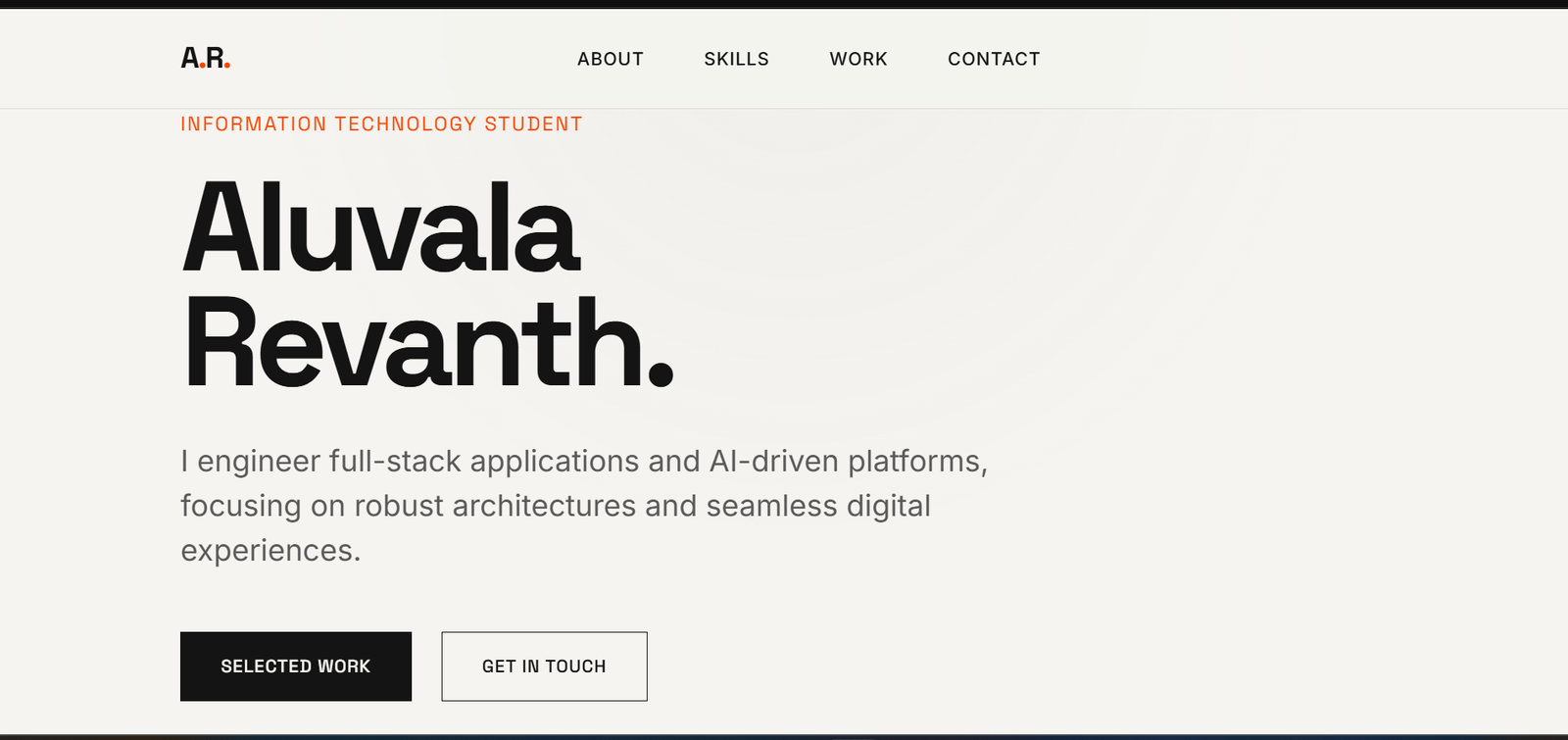

As an Information Technology student, I have been continuously exploring different areas of technology, including web development, machine learning, artificial intelligence, and problem solving. While working on different projects and learning new technologies, I realized that having a professional portfolio is an important way to present my skills, projects, and experiences in one place. This motivated me to build my own personal portfolio website.
Why I Built a Portfolio Website
A resume provides a quick overview of a candidate, but a portfolio can provide much more context. It allows me to showcase the projects I have worked on, the technologies I have learned, and the problems I have tried to solve.
My goal was to create a website that represents my technical journey and gives recruiters, developers, and other visitors a quick understanding of my skills and interests.
Instead of simply listing technologies, I wanted my portfolio to demonstrate how I use those technologies to build practical projects.
Technologies and Tools
While developing my portfolio, I focused on creating a modern and responsive web experience. My experience with technologies such as HTML, CSS, JavaScript, React, and other modern web development tools helped me structure and develop the website.
I also used Git and GitHub for version control and project management. Deployment allowed me to make the portfolio accessible online so that it can be easily shared with recruiters and other professionals.
The development process also gave me an opportunity to think beyond just writing code. I had to consider user experience, visual hierarchy, responsive design, performance, and how technical information should be presented clearly.
Key Sections of My Portfolio
The portfolio is organized into different sections to make it easy for visitors to understand my background.
The About section provides a short introduction about me and my interests in technology. The Skills section highlights the programming languages, frameworks, and technologies I have been learning.
The Projects section is one of the most important parts of the website. Instead of only mentioning project names, I use it to explain what each project does and the technologies involved.
I also include relevant information about my education, experience, achievements, and ways to connect with me through platforms such as GitHub and LinkedIn.
Highlighting My Projects
One of the major reasons for building this portfolio was to showcase practical projects.
For example, CivicSense is an AI-powered civic issue management platform designed to help citizens report problems such as potholes, road damage, garbage, drainage issues, and broken streetlights. The project combines a web application with machine learning-based image analysis to categorize and prioritize reported issues.
Another project I worked on is PitchForge AI, a README-to-Pitch Deck Generator designed to transform project documentation into structured presentation content. Working on projects like these helped me understand how different technologies can be combined to solve practical problems.
These projects also demonstrate my growing interest in the intersection of software development, machine learning, and artificial intelligence.
Challenges and Lessons Learned
Building a portfolio website was not only about creating individual pages. One of the main challenges was deciding what information to include and how to present it without making the website overwhelming.
I learned that good design is not simply about adding more elements. Information needs to be organized so that visitors can quickly find what they are looking for.
I also gained more experience with responsive design, deployment, version control, and presenting technical projects to an audience that may not have detailed knowledge of the technologies used.
Most importantly, the process taught me to think of a project from both a developer’s perspective and a user’s perspective.
Conclusion
Building my personal portfolio website has been an important step in my development as an IT student. It provides a central place where I can showcase my projects, skills, experiences, and ongoing learning journey.
My portfolio is not a finished product. As I continue learning software development, machine learning, and AI, I plan to keep improving it and adding new projects and experiences.
For me, the portfolio represents more than just a website. It represents my progress as a developer and gives me a platform to share what I build, what I learn, and where I am heading next.

Leave a Reply
You must be logged in to post a comment.