

Introduction
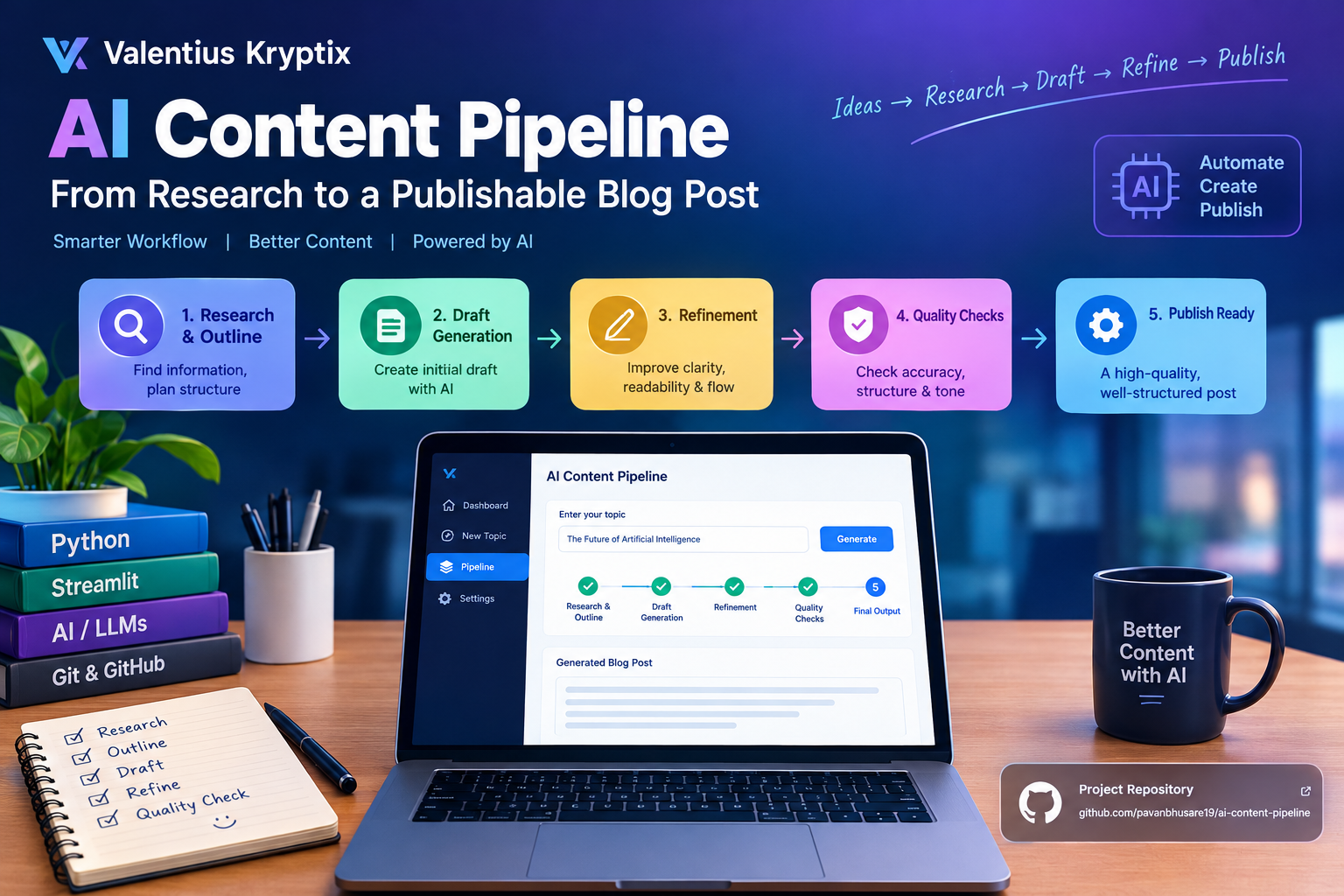
Artificial Intelligence is transforming the way people create and manage digital content. From generating ideas to drafting articles, AI tools are helping writers work more efficiently. However, producing a high-quality blog post requires more than a single prompt. It involves research, planning, writing, refinement, and quality checking.
As part of my internship at Valentius Kryptix, I developed an AI Content Pipeline project designed to simplify this process through a structured, multi-step workflow.
What Is an AI Content Pipeline?
An AI Content Pipeline is a system that automates different stages of content creation. Instead of generating an entire article in one step, the system divides the task into smaller stages. Each stage has a specific purpose and contributes to the quality of the final output.
My project demonstrates how AI can support a more organized and repeatable approach to blog writing.
Key Features of the Project
The AI Content Pipeline includes several important features:
- Topic-based content generation: Users provide a topic to begin the content creation process.
- Research and outline: The workflow starts by organizing relevant information and planning the article structure.
- Draft generation: AI generates an initial article based on the outline, selected tone, and target audience.
- Content refinement: The draft goes through an improvement stage to enhance clarity, readability, and organization.
- Quality checks: The system checks the generated content against selected quality criteria.
- Configurable writing options: Users can specify the target word count, tone, and intended audience.
These features help make the content creation process more structured than a single-step AI writing prompt.
How the Workflow Works
The project follows a multi-stage workflow.
Stage 1: Research and Outline
The process begins with a topic. The system organizes the subject into key points and creates an outline to guide the article.
Stage 2: Draft Generation
Using the outline, the AI generates an initial draft. The selected tone and target audience help shape the writing style.
Stage 3: Refinement
The initial draft is reviewed and improved to make the content easier to understand, better organized, and more suitable for readers.
Stage 4: Quality Checks
The final stage evaluates the content against the pipeline’s configured checks. This helps identify areas that may require further improvement before publication.
Technologies Used
The project uses Python to implement the application logic and Streamlit to provide an interactive user interface. A language model API supports AI-powered content generation and refinement. Git and GitHub are used for version control and project management.
Together, these technologies demonstrate how AI capabilities can be combined with a simple interface to build a practical content-generation application.
Benefits of an AI Content Pipeline
A structured pipeline offers several advantages. It breaks a large writing task into manageable steps, encourages consistent article structure, and makes the content creation process easier to repeat. It also gives users more control over writing tone, audience, and target length.
However, AI-generated content should not be published without review. Writers must verify factual claims, improve generic passages, check originality, and ensure that the article provides genuine value to readers.
Challenges and Learning Outcomes
Developing this project helped me understand the importance of workflow design, prompt engineering, API integration, and user experience. I also learned that generating text is only one part of building a useful AI application. Each stage must contribute to the final result, and the application should handle errors and unexpected outputs appropriately.
Another important lesson was the value of quality checks. A generated article may need additional editing even when it appears complete. Human review remains essential for accuracy, relevance, and responsible AI use.
Conclusion
The AI Content Pipeline project demonstrates a practical approach to AI-assisted content creation. By combining research and outlining, draft generation, refinement, and quality checks, the application provides a structured workflow for producing blog content.
Working on this project during my internship at Valentius Kryptix has strengthened my understanding of Python, AI integration, and application development. It has also shown me how thoughtfully designed AI workflows can support content creators while keeping human judgment at the center of the publishing process.
Project Repository: https://github.com/pavanbhusare19/ai-content-pipeline

Leave a Reply
You must be logged in to post a comment.